logo
Products
PRODUCTS DETAILS
Home > Products >
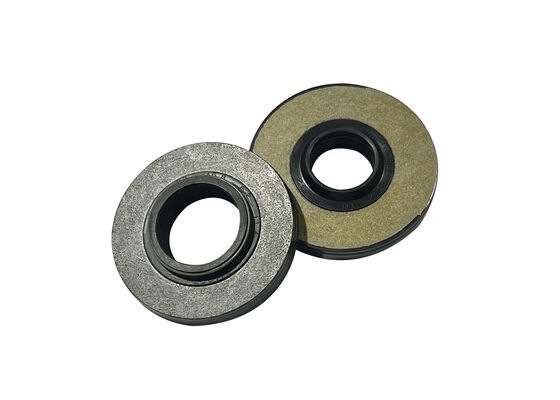
High Temperature Shock Oil Seal for Hydraulic Shock Absorbers

High Temperature Shock Oil Seal for Hydraulic Shock Absorbers

MOQ: 1000pcs
Price: negotiation
Standard Packaging: standard export package
Delivery Period: 30 working days for new samples
Payment Method: T/T,Western Union,L/C
Supply Capacity: 50,000pcs per month
Detail Information
Place of Origin
NINGBO, CHINA
Brand Name
XIAYI
Certification
IATF16949:2016
Model Number
20*33*10/15
Product Name:
Oil Seal
Material:
NBR
Tensile Strength:
14.2MPa
Application:
Shock Absorber
Sample Time:
10days
Elongation @ Break:
265%
Product Description
Good Seal NBR Rubber Shock Absorber Oil Seal — Verified Tensile Strength 14.2 MPa for High-Temperature Hydraulic Applications Product Overview

The XIAYI High-Temperature Shock Absorber Oil Seal (Model: 20×33×10/15) is purpose-built for hydraulic shock absorber systems operating in elevated temperature environments. Manufactured from premium NBR rubber compound under HG/T2810-2008 WA8533 standards, this oil seal delivers verified mechanical performance: tensile strength of 14.2 MPa (exceeding the 12 MPa specification), elongation at break of 265% (versus a 150% minimum requirement), and Shore A hardness of 84 within the 80±5 target range.

Every critical dimension — main lip diameter, dustproof lip, outer diameter, and dual-height profiles — is individually inspected using projector and caliper methods, with actual measurement data documented and traceable. This is not a catalog-estimate product; this is a data-verified, laboratory-tested sealing solution engineered for applications where thermal stability and mechanical integrity are essential.

Addressing Critical Customer Requirements

Customers sourcing oil seals for high-temperature hydraulic applications face specific technical challenges. Here is how XIAYI addresses them:

Concern 1: Thermal Degradation Causing Seal Hardening & Leakage

In high-temperature shock absorber environments, inferior rubber compounds harden, lose elasticity, and eventually leak. Our NBR material, tested per GB/T3512-2001 air oven aging standards, shows minimal degradation: hardness change of only +3 points (spec: 0~+10), tensile strength change of −2% (spec: max −20%), and elongation change of −6% (spec: max −50%). Combined with a brittleness temperature of −40°C, the seal maintains flexibility across an extreme thermal spectrum without compromising sealing integrity.

Concern 2: Unverified Material Performance Claims

Many suppliers provide nominal specifications without test verification. XIAYI provides actual measured results for every critical property: tensile strength (14.2 MPa actual vs. 12 MPa spec), elongation at break (265% actual vs. 150% spec), tear strength (59.56 N/mm actual vs. 30 N/mm minimum), and compression deformation (only 19 under 100°C × 70 h conditions). Oil resistance testing in both IRM901 and IRM903 reference oils confirms stable hardness and volume change within tight tolerances. You receive a seal backed by data, not just promises.

Concern 3: Dimensional Variation Across Production Batches

Inconsistent dimensions cause assembly line rejections and field failures. We implement 100% dimensional inspection using projectors and calibrated calipers. For our 20×33×10/15 model, actual production measurements demonstrate tight process control: main lip Ø18.12–18.16 mm (spec: 18.20±0.35), OD 33.16–33.26 mm (spec: 33+0.3/+0.1), and consistent height profiles well within tolerance bands. Every shipment includes documented inspection data for full traceability.

Concern 4: Limited Supplier Capability for Integrated Shock Absorber Component Sourcing

Managing multiple suppliers for different shock absorber components increases complexity, lead time risk, and logistics cost. XIAYI manufactures a comprehensive range of shock absorber parts in-house: oil seals, pistons, rod guides, base valves, piston rods, valve discs, stamping parts, and sintered components. Our powder metallurgy capability covers professional Fe/Cu-based parts with a complete process flow from mixing through vacuum oiling. Single-source procurement simplifies your supply chain and ensures component compatibility.

Concern 5: Quality Consistency Without Independent Verification

Relying solely on supplier quality claims introduces risk. XIAYI maintains a comprehensive quality assurance system: electronic balances ensure consistent material density, specialized test equipment verifies crushing strength, and dedicated QC and PQC teams monitor close tolerance and accurate dimensions at every production stage. Our IATF 16949:2016 certification, combined with ISO 9001:2000 and ROHS/FDA compliance, provides independent third-party validation of our quality management system.

Key Performance Data at a Glance

Tensile: 14.2 MPa Elongation: 265% Hardness: 84 ShA Tear: 59.56 N/mm Brittleness: −40°C Compression Def.: 19

Dimensional Inspection Report (Model: 20×33×10/15)
ITEMSPECIFICATIONTEST METHODMEASURED RESULT
Main Lip DiameterØ18.20 ± 0.35 mmProjector18.12 – 18.16 mm
Dustproof Lip DiameterØ18.90 ± 0.30 mmProjector18.64 – 18.72 mm
Outer Diameter (OD)Ø33 +0.3/+0.1 mmCaliper33.16 – 33.26 mm
Height (1)10 ± 0.20 mmCaliper10.10 – 10.16 mm
Height (2)15 ± 0.30 mmCaliper15.20 – 15.24 mm
Material Property Test Report (NBR Compound per HG/T2810-2008 WA8533)
TEST ITEMSPECIFICATIONRESULTTEST STANDARD
Shore A Hardness80 ± 584GB/T531-1999
Tensile Strength≥ 12 MPa14.2 MPaGB/T528-1998
Elongation at Break≥ 150%265%
Compression Deformation (100°C × 70 h, Sample B)Max +5019GB/T7759-1996
Tear Strength (Right Angle)≥ 30 N/mm59.56 N/mmGB/T529-1999
Air Oven Aging (GB/T3512-2001)Hardness Change0 ~ +10+3GB/T3512-2001
Tensile Strength ChangeMax −20%−2%
Elongation ChangeMax −50%−6%
Oil Resistance — IRM901 (100°C × 70 h)Hardness Change−5 ~ +10+3GB/T1690-1992
Volume Change−10% ~ +5%+1%
Oil Resistance — IRM903 (100°C × 70 h)Hardness Change−10 ~ +5−2GB/T1690-1992
Volume Change0% ~ +20%+4%
Brittleness Temperature≤ −40°C−40°CGB/T1682-1994
Compression Valve Seat — Available Dimensions

We can produce valve seats in various dimensions to match your shock absorber specifications:

ØDØD1ØD2ØdHH1H2h
2823.822.116114.32.53
29.825.822.11611.54.32.53.5
3328.322.116157.334
3429.122.117169.53.54
3530.822.116157.334
Manufacturing Equipment & Capabilities
  • Automatic Hydraulic Press Machines — High-pressure forming for consistent rubber part density and dimensional accuracy
  • Automatic Mechanical Pressers — Precision compaction for powder metallurgy components
  • Vacuum Sintering Furnaces — Controlled-atmosphere sintering for Fe/Cu-based powder metal parts
  • CNC Tooling Machines — In-house mold and tooling fabrication for rapid prototyping and production
  • Complete Sintered Parts Process Flow: Mixing → Compacting → Sintering → Re-Sizing → Ultrasonic Cleaning → Vacuum Oiling → Packing
  • Production Capability: 50,000 pcs per month across oil seals, pistons, rod guides, base valves, piston rods, valve discs, stamping parts, and sintered components
Sintered Parts — Powder Metallurgy Capabilities
  • Professional Fe/Cu-Based Powder Metallurgy Manufacturing — Specialized in automotive-grade ferrous and copper-based sintered components
  • High Precision & Low Noise — Optimized powder compaction and sintering parameters for superior surface finish and dimensional control
  • Wear Resistance & Energy Efficiency — Engineered porosity for self-lubrication, reducing friction and energy consumption in operation
  • Environmentally Responsible — Near-net-shape manufacturing minimizes material waste compared to traditional machining
  • Design & Development Capability — Extensive experience with gears, bearings, bushings, and structural parts produced from customer drawings or samples
  • Quality Verification — Electronic balance density checks, crushing strength testing, and dedicated QC/PQC teams for dimensional verification
Competitive Advantages
  1. Data-Verified Quality — Every critical material property is laboratory tested and documented, providing objective evidence of performance rather than nominal claims.
  2. Electronic Density Control — Precision electronic balances ensure consistent material density across every production batch, directly impacting seal performance and longevity.
  3. Crushing Strength Verification — Dedicated test equipment validates structural integrity under load, critical for high-pressure hydraulic applications.
  4. Dual QC/PQC Inspection System — Quality Control and Process Quality Control teams work in parallel to ensure tight tolerances and accurate dimensions at every stage.
  5. Integrated Manufacturing — In-house production of oil seals, powder metallurgy components, stamping parts, and machined components enables single-source procurement.
  6. Established Test Standards Compliance — All testing performed to GB/T national standards with full traceability to international equivalents.
  7. Custom Dimensional Capability — Multiple valve seat dimensions available with ability to produce custom sizes based on customer specifications.
Applications
  • Automotive Hydraulic Shock Absorbers — Passenger vehicles, SUVs, and commercial trucks requiring high-temperature seal stability
  • Motorcycle Suspension Systems — Front fork and rear shock oil seals for all engine displacement classes
  • Hydraulic Pump Components — Sealing solutions for pump shafts and rotating assemblies
  • Locomotive Damping Systems — Heavy-duty seals for railway vehicle suspension and vibration control
  • Industrial Machinery — Hydraulic cylinders, dampers, and fluid power systems operating at elevated temperatures
Frequently Asked Questions (FAQ)
Q1: What test data can you provide to verify the material quality of your oil seals?

We provide a complete material certification package including: Shore A hardness (tested to GB/T531-1999), tensile strength and elongation at break (GB/T528-1998), compression deformation at 100°C × 70 hours (GB/T7759-1996), tear strength (GB/T529-1999), air oven aging test results (GB/T3512-2001), oil resistance in both IRM901 and IRM903 reference oils (GB/T1690-1992), and brittleness temperature (GB/T1682-1994). Our standard NBR compound achieves 14.2 MPa tensile strength and 265% elongation — both significantly exceeding specification minimums. Test reports accompany every production shipment.

Q2: How does your oil seal perform under sustained high-temperature operation?

Our NBR oil seals are tested for thermal stability through standardized air oven aging at elevated temperatures per GB/T3512-2001. The test data demonstrates exceptional thermal resistance: after accelerated aging, hardness changes by only +3 points, tensile strength decreases by merely 2%, and elongation reduction is just 6% — all well within specification limits. The brittleness temperature of −40°C confirms low-temperature flexibility. For applications requiring sustained operation above 120°C, we also offer FKM (Viton) and Silicone compound alternatives with enhanced high-temperature resistance up to 350°C.

Q3: How do you ensure dimensional consistency across multiple production batches?

We implement a rigorous dimensional control system: 100% inspection of critical dimensions (main lip, dustproof lip, OD, and heights) using calibrated projectors and digital calipers. Actual production measurements are documented for every batch — for example, our main lip diameter consistently measures between 18.12–18.16 mm against a specification of 18.20±0.35 mm, demonstrating process capability well within the tolerance band. Our dual QC/PQC inspection system provides redundant verification to catch any drift before it affects production output.

Q4: What other shock absorber components can you supply besides oil seals?

XIAYI is a comprehensive shock absorber parts manufacturer. Beyond oil seals, we produce: powder metallurgy pistons, rod guides, base valves (foot valves), piston rods, valve discs, stamping parts, and various sintered components (Fe/Cu-based). We also manufacture compression valve seats in multiple dimensions (OD 28–35 mm range) and offer custom sizes. For customers seeking integrated sourcing, we can supply complete component kits for shock absorber assembly, reducing your supplier count, logistics complexity, and total procurement cost.

Q5: What is your MOQ and typical delivery schedule?

Our standard MOQ is 1,000 pcs for production orders. Sample orders can be accommodated in smaller quantities with a lead time of approximately 10 days. For new sample development, delivery is approximately 30 working days after technical drawings and specifications are confirmed. Our monthly supply capacity of 50,000 pcs ensures we can support both pilot programs and full-scale production requirements. We accept T/T, Western Union, and L/C payment methods, with standard export packaging provided for all shipments.

Q6: Can you produce oil seals to our specific dimensional and material requirements?

Yes, we specialize in custom OEM manufacturing. Provide your 2D/3D drawings with required dimensions (lip diameters, OD, heights, and any special profile features), material specifications, and target quantities. Our engineering team will review feasibility, recommend optimal compound selection, and provide a quotation. We can match or customize Shore A hardness within a ±5 point range and formulate compounds for specific oil resistance, temperature, or mechanical property requirements. We also offer design optimization suggestions based on our extensive shock absorber application experience.

Q7: How does powder metallurgy compare to traditional machining for shock absorber components?

Powder metallurgy (PM) offers several advantages for shock absorber components: near-net-shape manufacturing reduces material waste by up to 90% compared to machining from bar stock, controlled porosity enables self-lubrication for reduced friction and wear, high-volume production consistency exceeds what is achievable with individual machining, and the process is more energy-efficient and environmentally friendly. Our PM process flow — Mixing → Compacting → Sintering → Re-Sizing → Ultrasonic Cleaning → Vacuum Oiling → Packing — produces components with high precision, low noise characteristics, and excellent wear resistance at a competitive cost. We can manufacture gears, bearings, bushings, and structural sintered parts to your drawings or samples.

Products
PRODUCTS DETAILS
High Temperature Shock Oil Seal for Hydraulic Shock Absorbers
MOQ: 1000pcs
Price: negotiation
Standard Packaging: standard export package
Delivery Period: 30 working days for new samples
Payment Method: T/T,Western Union,L/C
Supply Capacity: 50,000pcs per month
Detail Information
Place of Origin
NINGBO, CHINA
Brand Name
XIAYI
Certification
IATF16949:2016
Model Number
20*33*10/15
Product Name:
Oil Seal
Material:
NBR
Tensile Strength:
14.2MPa
Application:
Shock Absorber
Sample Time:
10days
Elongation @ Break:
265%
Minimum Order Quantity:
1000pcs
Price:
negotiation
Packaging Details:
standard export package
Delivery Time:
30 working days for new samples
Payment Terms:
T/T,Western Union,L/C
Supply Ability:
50,000pcs per month
Product Description
Good Seal NBR Rubber Shock Absorber Oil Seal — Verified Tensile Strength 14.2 MPa for High-Temperature Hydraulic Applications Product Overview

The XIAYI High-Temperature Shock Absorber Oil Seal (Model: 20×33×10/15) is purpose-built for hydraulic shock absorber systems operating in elevated temperature environments. Manufactured from premium NBR rubber compound under HG/T2810-2008 WA8533 standards, this oil seal delivers verified mechanical performance: tensile strength of 14.2 MPa (exceeding the 12 MPa specification), elongation at break of 265% (versus a 150% minimum requirement), and Shore A hardness of 84 within the 80±5 target range.

Every critical dimension — main lip diameter, dustproof lip, outer diameter, and dual-height profiles — is individually inspected using projector and caliper methods, with actual measurement data documented and traceable. This is not a catalog-estimate product; this is a data-verified, laboratory-tested sealing solution engineered for applications where thermal stability and mechanical integrity are essential.

Addressing Critical Customer Requirements

Customers sourcing oil seals for high-temperature hydraulic applications face specific technical challenges. Here is how XIAYI addresses them:

Concern 1: Thermal Degradation Causing Seal Hardening & Leakage

In high-temperature shock absorber environments, inferior rubber compounds harden, lose elasticity, and eventually leak. Our NBR material, tested per GB/T3512-2001 air oven aging standards, shows minimal degradation: hardness change of only +3 points (spec: 0~+10), tensile strength change of −2% (spec: max −20%), and elongation change of −6% (spec: max −50%). Combined with a brittleness temperature of −40°C, the seal maintains flexibility across an extreme thermal spectrum without compromising sealing integrity.

Concern 2: Unverified Material Performance Claims

Many suppliers provide nominal specifications without test verification. XIAYI provides actual measured results for every critical property: tensile strength (14.2 MPa actual vs. 12 MPa spec), elongation at break (265% actual vs. 150% spec), tear strength (59.56 N/mm actual vs. 30 N/mm minimum), and compression deformation (only 19 under 100°C × 70 h conditions). Oil resistance testing in both IRM901 and IRM903 reference oils confirms stable hardness and volume change within tight tolerances. You receive a seal backed by data, not just promises.

Concern 3: Dimensional Variation Across Production Batches

Inconsistent dimensions cause assembly line rejections and field failures. We implement 100% dimensional inspection using projectors and calibrated calipers. For our 20×33×10/15 model, actual production measurements demonstrate tight process control: main lip Ø18.12–18.16 mm (spec: 18.20±0.35), OD 33.16–33.26 mm (spec: 33+0.3/+0.1), and consistent height profiles well within tolerance bands. Every shipment includes documented inspection data for full traceability.

Concern 4: Limited Supplier Capability for Integrated Shock Absorber Component Sourcing

Managing multiple suppliers for different shock absorber components increases complexity, lead time risk, and logistics cost. XIAYI manufactures a comprehensive range of shock absorber parts in-house: oil seals, pistons, rod guides, base valves, piston rods, valve discs, stamping parts, and sintered components. Our powder metallurgy capability covers professional Fe/Cu-based parts with a complete process flow from mixing through vacuum oiling. Single-source procurement simplifies your supply chain and ensures component compatibility.

Concern 5: Quality Consistency Without Independent Verification

Relying solely on supplier quality claims introduces risk. XIAYI maintains a comprehensive quality assurance system: electronic balances ensure consistent material density, specialized test equipment verifies crushing strength, and dedicated QC and PQC teams monitor close tolerance and accurate dimensions at every production stage. Our IATF 16949:2016 certification, combined with ISO 9001:2000 and ROHS/FDA compliance, provides independent third-party validation of our quality management system.

Key Performance Data at a Glance

Tensile: 14.2 MPa Elongation: 265% Hardness: 84 ShA Tear: 59.56 N/mm Brittleness: −40°C Compression Def.: 19

Dimensional Inspection Report (Model: 20×33×10/15)
ITEMSPECIFICATIONTEST METHODMEASURED RESULT
Main Lip DiameterØ18.20 ± 0.35 mmProjector18.12 – 18.16 mm
Dustproof Lip DiameterØ18.90 ± 0.30 mmProjector18.64 – 18.72 mm
Outer Diameter (OD)Ø33 +0.3/+0.1 mmCaliper33.16 – 33.26 mm
Height (1)10 ± 0.20 mmCaliper10.10 – 10.16 mm
Height (2)15 ± 0.30 mmCaliper15.20 – 15.24 mm
Material Property Test Report (NBR Compound per HG/T2810-2008 WA8533)
TEST ITEMSPECIFICATIONRESULTTEST STANDARD
Shore A Hardness80 ± 584GB/T531-1999
Tensile Strength≥ 12 MPa14.2 MPaGB/T528-1998
Elongation at Break≥ 150%265%
Compression Deformation (100°C × 70 h, Sample B)Max +5019GB/T7759-1996
Tear Strength (Right Angle)≥ 30 N/mm59.56 N/mmGB/T529-1999
Air Oven Aging (GB/T3512-2001)Hardness Change0 ~ +10+3GB/T3512-2001
Tensile Strength ChangeMax −20%−2%
Elongation ChangeMax −50%−6%
Oil Resistance — IRM901 (100°C × 70 h)Hardness Change−5 ~ +10+3GB/T1690-1992
Volume Change−10% ~ +5%+1%
Oil Resistance — IRM903 (100°C × 70 h)Hardness Change−10 ~ +5−2GB/T1690-1992
Volume Change0% ~ +20%+4%
Brittleness Temperature≤ −40°C−40°CGB/T1682-1994
Compression Valve Seat — Available Dimensions

We can produce valve seats in various dimensions to match your shock absorber specifications:

ØDØD1ØD2ØdHH1H2h
2823.822.116114.32.53
29.825.822.11611.54.32.53.5
3328.322.116157.334
3429.122.117169.53.54
3530.822.116157.334
Manufacturing Equipment & Capabilities
  • Automatic Hydraulic Press Machines — High-pressure forming for consistent rubber part density and dimensional accuracy
  • Automatic Mechanical Pressers — Precision compaction for powder metallurgy components
  • Vacuum Sintering Furnaces — Controlled-atmosphere sintering for Fe/Cu-based powder metal parts
  • CNC Tooling Machines — In-house mold and tooling fabrication for rapid prototyping and production
  • Complete Sintered Parts Process Flow: Mixing → Compacting → Sintering → Re-Sizing → Ultrasonic Cleaning → Vacuum Oiling → Packing
  • Production Capability: 50,000 pcs per month across oil seals, pistons, rod guides, base valves, piston rods, valve discs, stamping parts, and sintered components
Sintered Parts — Powder Metallurgy Capabilities
  • Professional Fe/Cu-Based Powder Metallurgy Manufacturing — Specialized in automotive-grade ferrous and copper-based sintered components
  • High Precision & Low Noise — Optimized powder compaction and sintering parameters for superior surface finish and dimensional control
  • Wear Resistance & Energy Efficiency — Engineered porosity for self-lubrication, reducing friction and energy consumption in operation
  • Environmentally Responsible — Near-net-shape manufacturing minimizes material waste compared to traditional machining
  • Design & Development Capability — Extensive experience with gears, bearings, bushings, and structural parts produced from customer drawings or samples
  • Quality Verification — Electronic balance density checks, crushing strength testing, and dedicated QC/PQC teams for dimensional verification
Competitive Advantages
  1. Data-Verified Quality — Every critical material property is laboratory tested and documented, providing objective evidence of performance rather than nominal claims.
  2. Electronic Density Control — Precision electronic balances ensure consistent material density across every production batch, directly impacting seal performance and longevity.
  3. Crushing Strength Verification — Dedicated test equipment validates structural integrity under load, critical for high-pressure hydraulic applications.
  4. Dual QC/PQC Inspection System — Quality Control and Process Quality Control teams work in parallel to ensure tight tolerances and accurate dimensions at every stage.
  5. Integrated Manufacturing — In-house production of oil seals, powder metallurgy components, stamping parts, and machined components enables single-source procurement.
  6. Established Test Standards Compliance — All testing performed to GB/T national standards with full traceability to international equivalents.
  7. Custom Dimensional Capability — Multiple valve seat dimensions available with ability to produce custom sizes based on customer specifications.
Applications
  • Automotive Hydraulic Shock Absorbers — Passenger vehicles, SUVs, and commercial trucks requiring high-temperature seal stability
  • Motorcycle Suspension Systems — Front fork and rear shock oil seals for all engine displacement classes
  • Hydraulic Pump Components — Sealing solutions for pump shafts and rotating assemblies
  • Locomotive Damping Systems — Heavy-duty seals for railway vehicle suspension and vibration control
  • Industrial Machinery — Hydraulic cylinders, dampers, and fluid power systems operating at elevated temperatures
Frequently Asked Questions (FAQ)
Q1: What test data can you provide to verify the material quality of your oil seals?

We provide a complete material certification package including: Shore A hardness (tested to GB/T531-1999), tensile strength and elongation at break (GB/T528-1998), compression deformation at 100°C × 70 hours (GB/T7759-1996), tear strength (GB/T529-1999), air oven aging test results (GB/T3512-2001), oil resistance in both IRM901 and IRM903 reference oils (GB/T1690-1992), and brittleness temperature (GB/T1682-1994). Our standard NBR compound achieves 14.2 MPa tensile strength and 265% elongation — both significantly exceeding specification minimums. Test reports accompany every production shipment.

Q2: How does your oil seal perform under sustained high-temperature operation?

Our NBR oil seals are tested for thermal stability through standardized air oven aging at elevated temperatures per GB/T3512-2001. The test data demonstrates exceptional thermal resistance: after accelerated aging, hardness changes by only +3 points, tensile strength decreases by merely 2%, and elongation reduction is just 6% — all well within specification limits. The brittleness temperature of −40°C confirms low-temperature flexibility. For applications requiring sustained operation above 120°C, we also offer FKM (Viton) and Silicone compound alternatives with enhanced high-temperature resistance up to 350°C.

Q3: How do you ensure dimensional consistency across multiple production batches?

We implement a rigorous dimensional control system: 100% inspection of critical dimensions (main lip, dustproof lip, OD, and heights) using calibrated projectors and digital calipers. Actual production measurements are documented for every batch — for example, our main lip diameter consistently measures between 18.12–18.16 mm against a specification of 18.20±0.35 mm, demonstrating process capability well within the tolerance band. Our dual QC/PQC inspection system provides redundant verification to catch any drift before it affects production output.

Q4: What other shock absorber components can you supply besides oil seals?

XIAYI is a comprehensive shock absorber parts manufacturer. Beyond oil seals, we produce: powder metallurgy pistons, rod guides, base valves (foot valves), piston rods, valve discs, stamping parts, and various sintered components (Fe/Cu-based). We also manufacture compression valve seats in multiple dimensions (OD 28–35 mm range) and offer custom sizes. For customers seeking integrated sourcing, we can supply complete component kits for shock absorber assembly, reducing your supplier count, logistics complexity, and total procurement cost.

Q5: What is your MOQ and typical delivery schedule?

Our standard MOQ is 1,000 pcs for production orders. Sample orders can be accommodated in smaller quantities with a lead time of approximately 10 days. For new sample development, delivery is approximately 30 working days after technical drawings and specifications are confirmed. Our monthly supply capacity of 50,000 pcs ensures we can support both pilot programs and full-scale production requirements. We accept T/T, Western Union, and L/C payment methods, with standard export packaging provided for all shipments.

Q6: Can you produce oil seals to our specific dimensional and material requirements?

Yes, we specialize in custom OEM manufacturing. Provide your 2D/3D drawings with required dimensions (lip diameters, OD, heights, and any special profile features), material specifications, and target quantities. Our engineering team will review feasibility, recommend optimal compound selection, and provide a quotation. We can match or customize Shore A hardness within a ±5 point range and formulate compounds for specific oil resistance, temperature, or mechanical property requirements. We also offer design optimization suggestions based on our extensive shock absorber application experience.

Q7: How does powder metallurgy compare to traditional machining for shock absorber components?

Powder metallurgy (PM) offers several advantages for shock absorber components: near-net-shape manufacturing reduces material waste by up to 90% compared to machining from bar stock, controlled porosity enables self-lubrication for reduced friction and wear, high-volume production consistency exceeds what is achievable with individual machining, and the process is more energy-efficient and environmentally friendly. Our PM process flow — Mixing → Compacting → Sintering → Re-Sizing → Ultrasonic Cleaning → Vacuum Oiling → Packing — produces components with high precision, low noise characteristics, and excellent wear resistance at a competitive cost. We can manufacture gears, bearings, bushings, and structural sintered parts to your drawings or samples.

宁波夏亿机电科技有限公司