logo
Products
PRODUCTS DETAILS
Home > Products >
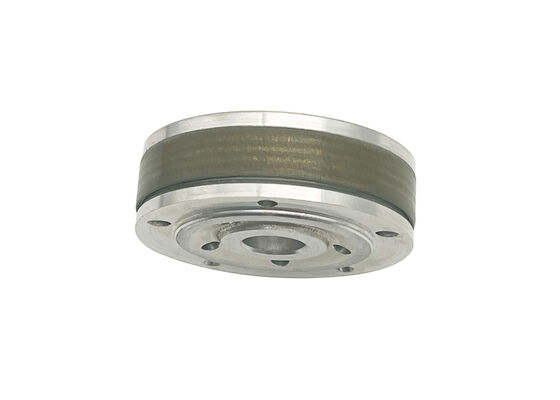
Aluminum Shock Absorber Piston with Custom Copper-Filled PTFE Banding

Aluminum Shock Absorber Piston with Custom Copper-Filled PTFE Banding

MOQ: 500pcs
Price: negotiation
Standard Packaging: According to customer’s demand
Delivery Period: 10 working days
Payment Method: T/T
Supply Capacity: 1,000,000pcs per month
Detail Information
Place of Origin
Ningbo, China
Brand Name
XIAYI
Certification
IATF16949:2016
Model Number
Φ30mm
Product Name:
Banded Piston
Material Of Piston:
Aluminum
Material Of Bands:
PTFE
Color:
White
Application:
Rear Shock Absorbers
Density Of Bands:
2.15 G/cm3
Outer Diameter:
44.88-44.94mm
Working Temp.:
260 ℃
Product Description
1. Product Overview

This shock absorber piston combines an aluminum body with a customized PTFE banding material filled with copper powder. The hybrid construction brings together a metal piston body and a polymer-based functional layer, with the final design determined by the damper geometry, mating requirements, and intended operating conditions.

In a shock absorber assembly, dimensional relationships between the piston and mating components are important. The body dimensions, finished outside diameter after banding, PTFE layer thickness, and band retention are all relevant when evaluating assembly fit and product performance.

XIAYI offers aluminum shock absorber pistons with customized PTFE banding solutions. Product designs can be reviewed against customer drawings, samples, and application requirements. For copper-powder-filled PTFE, the material specification, dimensional targets, and validation criteria should be confirmed for the individual project.

2. Product Construction and Engineering Features
Aluminum Piston Body

The piston body is made of aluminum rather than iron-based powder metallurgy. The specific aluminum grade, manufacturing process, critical dimensions, and tolerances should be confirmed according to the approved drawing and application requirements.

Customized Copper-Filled PTFE Banding Material

The banding material is a customized PTFE formulation containing copper powder. The copper content and formulation ratio must be defined by the actual material specification; performance cannot be reliably inferred from the material name alone.

During product development, the PTFE formulation, finished dimensions, surface condition, and fit with the aluminum body can be reviewed. Where friction, wear, or operating temperature is critical, the requirements should be verified using material documentation and relevant test results.

Finished Dimensions and Band Retention

For a PTFE-banded piston, the finished outside diameter and band dimensions must match the mating components. Band retention is another important quality parameter.

The piston body dimensions, dimensions before and after banding, and assembly requirements can be defined from the drawing. Retention or pull-off force should be evaluated using agreed test conditions and acceptance criteria established for the project.

Custom Development for OEM Applications

Different shock absorber designs may require different piston profiles, banding configurations, and fit dimensions. XIAYI can review 2D drawings, 3D models, or physical samples to assess manufacturability and confirm material, dimensional, inspection, and supply requirements.

3. Technical Specifications

Parameter

Current Data / Status

Technical Notes

Product

Aluminum Shock Absorber Piston

For damper applications

Construction

2 main material systems: aluminum body + copper-filled PTFE banding material

Band count and configuration depend on the drawing

Piston body material

Aluminum

Specific aluminum grade to be confirmed

Banding material

Customized copper-filled PTFE

Copper content and formulation ratio not yet provided

Finished outside diameter

To be confirmed, in mm

Defined by the approved product drawing

Aluminum body outside diameter

To be confirmed, in mm

Based on body drawing and assembly requirements

PTFE layer thickness

To be confirmed, in mm

Defined by the product configuration and drawing

Critical dimensional tolerances

To be confirmed, in mm

Established from approved drawings and manufacturing requirements

Band retention / pull-off force

Target to be confirmed, in N

Test method, fixture, and test conditions must be specified

Friction and wear performance

No verified numerical test data currently available

Requires evaluation of the formulation and application

Operating temperature range

No confirmed product-specific value available

Must be assessed for the customized PTFE formulation and service conditions

Inspection items

Dimensions, band appearance, finished outside diameter, and agreed retention testing

Inspection frequency and acceptance criteria are project-specific

Applications

Automotive and motorcycle shock absorbers

Final suitability depends on design and operating conditions

4. Key Quality Control Considerations
Piston Body Dimensions

Verify the body outside diameter, mounting features, and other drawing-defined dimensions to confirm compatibility with the mating components.

Finished Dimensions After Banding

The finished outside diameter is a key parameter for checking the fit of a PTFE-banded piston. It should be measured and accepted against the approved drawing and actual assembly requirements.

PTFE Band Appearance

Inspect the PTFE band against the customer's agreed visual criteria, including visible defects, localized irregularities, and surface condition.

Band Retention

Where required, establish a suitable band-retention or pull-off force test. Define the fixture, loading direction, test speed, and acceptance criteria so that results can be compared consistently across batches.

Material and Batch Identification

For customized copper-filled PTFE, define how the formulation or material grade is identified, recorded, and accepted. This helps avoid unapproved mixing of different material versions.

5. Typical Applications

Application

Main Technical Considerations

Automotive shock absorbers

Piston outside diameter, finished banded dimensions, and operating conditions

Motorcycle shock absorbers

Component geometry, band dimensions, and assembly fit

New OEM product development

Aluminum grade, PTFE formulation, and critical dimensions

Volume purchasing of banded pistons

Band appearance, dimensional consistency, and retention inspection

Replacement components

Existing dimensions, banding configuration, and assembly requirements

6. Information Required for Customization and Quotation

To evaluate the specification and prepare an accurate quotation, please provide:

  1. Drawings or a 3D model of the aluminum body and finished banded piston.
  2. Aluminum grade and critical body dimensions.
  3. Technical requirements or an existing material specification for the copper-filled PTFE.
  4. Finished outside diameter, band thickness, and critical tolerances.
  5. Any specified band pull-off force, friction, or wear test requirements.
  6. Expected order quantity, sample requirements, and batch acceptance criteria.

Based on this information, XIAYI can review the component structure, material requirements, and dimensional fit, then confirm the manufacturing approach and project acceptance requirements.

7. Frequently Asked Questions

Q1: Is this a powder metallurgy shock absorber piston?

No. The piston body is made of aluminum, and the banding layer uses customized copper-powder-filled PTFE. This is a different construction from an iron-based powder metallurgy piston.

Q2: What is the copper content in the PTFE banding material?

A specific copper content has not yet been provided. The value should follow the customized formulation or approved material specification and should not be published as a percentage without supporting documentation.

Q3: How can band separation from the piston body be evaluated?

Band retention should be evaluated using a test method suited to the component design, such as an agreed pull-off force test. The test conditions and acceptance criteria must be established for the project; material names alone cannot confirm that retention requirements are met.

Q4: Can the piston be customized to customer drawings?

The product can be reviewed against customer drawings, samples, and technical requirements. Providing the body dimensions, finished banded dimensions, material specification, and acceptance criteria helps improve specification accuracy.

Products
PRODUCTS DETAILS
Aluminum Shock Absorber Piston with Custom Copper-Filled PTFE Banding
MOQ: 500pcs
Price: negotiation
Standard Packaging: According to customer’s demand
Delivery Period: 10 working days
Payment Method: T/T
Supply Capacity: 1,000,000pcs per month
Detail Information
Place of Origin
Ningbo, China
Brand Name
XIAYI
Certification
IATF16949:2016
Model Number
Φ30mm
Product Name:
Banded Piston
Material Of Piston:
Aluminum
Material Of Bands:
PTFE
Color:
White
Application:
Rear Shock Absorbers
Density Of Bands:
2.15 G/cm3
Outer Diameter:
44.88-44.94mm
Working Temp.:
260 ℃
Minimum Order Quantity:
500pcs
Price:
negotiation
Packaging Details:
According to customer’s demand
Delivery Time:
10 working days
Payment Terms:
T/T
Supply Ability:
1,000,000pcs per month
Product Description
1. Product Overview

This shock absorber piston combines an aluminum body with a customized PTFE banding material filled with copper powder. The hybrid construction brings together a metal piston body and a polymer-based functional layer, with the final design determined by the damper geometry, mating requirements, and intended operating conditions.

In a shock absorber assembly, dimensional relationships between the piston and mating components are important. The body dimensions, finished outside diameter after banding, PTFE layer thickness, and band retention are all relevant when evaluating assembly fit and product performance.

XIAYI offers aluminum shock absorber pistons with customized PTFE banding solutions. Product designs can be reviewed against customer drawings, samples, and application requirements. For copper-powder-filled PTFE, the material specification, dimensional targets, and validation criteria should be confirmed for the individual project.

2. Product Construction and Engineering Features
Aluminum Piston Body

The piston body is made of aluminum rather than iron-based powder metallurgy. The specific aluminum grade, manufacturing process, critical dimensions, and tolerances should be confirmed according to the approved drawing and application requirements.

Customized Copper-Filled PTFE Banding Material

The banding material is a customized PTFE formulation containing copper powder. The copper content and formulation ratio must be defined by the actual material specification; performance cannot be reliably inferred from the material name alone.

During product development, the PTFE formulation, finished dimensions, surface condition, and fit with the aluminum body can be reviewed. Where friction, wear, or operating temperature is critical, the requirements should be verified using material documentation and relevant test results.

Finished Dimensions and Band Retention

For a PTFE-banded piston, the finished outside diameter and band dimensions must match the mating components. Band retention is another important quality parameter.

The piston body dimensions, dimensions before and after banding, and assembly requirements can be defined from the drawing. Retention or pull-off force should be evaluated using agreed test conditions and acceptance criteria established for the project.

Custom Development for OEM Applications

Different shock absorber designs may require different piston profiles, banding configurations, and fit dimensions. XIAYI can review 2D drawings, 3D models, or physical samples to assess manufacturability and confirm material, dimensional, inspection, and supply requirements.

3. Technical Specifications

Parameter

Current Data / Status

Technical Notes

Product

Aluminum Shock Absorber Piston

For damper applications

Construction

2 main material systems: aluminum body + copper-filled PTFE banding material

Band count and configuration depend on the drawing

Piston body material

Aluminum

Specific aluminum grade to be confirmed

Banding material

Customized copper-filled PTFE

Copper content and formulation ratio not yet provided

Finished outside diameter

To be confirmed, in mm

Defined by the approved product drawing

Aluminum body outside diameter

To be confirmed, in mm

Based on body drawing and assembly requirements

PTFE layer thickness

To be confirmed, in mm

Defined by the product configuration and drawing

Critical dimensional tolerances

To be confirmed, in mm

Established from approved drawings and manufacturing requirements

Band retention / pull-off force

Target to be confirmed, in N

Test method, fixture, and test conditions must be specified

Friction and wear performance

No verified numerical test data currently available

Requires evaluation of the formulation and application

Operating temperature range

No confirmed product-specific value available

Must be assessed for the customized PTFE formulation and service conditions

Inspection items

Dimensions, band appearance, finished outside diameter, and agreed retention testing

Inspection frequency and acceptance criteria are project-specific

Applications

Automotive and motorcycle shock absorbers

Final suitability depends on design and operating conditions

4. Key Quality Control Considerations
Piston Body Dimensions

Verify the body outside diameter, mounting features, and other drawing-defined dimensions to confirm compatibility with the mating components.

Finished Dimensions After Banding

The finished outside diameter is a key parameter for checking the fit of a PTFE-banded piston. It should be measured and accepted against the approved drawing and actual assembly requirements.

PTFE Band Appearance

Inspect the PTFE band against the customer's agreed visual criteria, including visible defects, localized irregularities, and surface condition.

Band Retention

Where required, establish a suitable band-retention or pull-off force test. Define the fixture, loading direction, test speed, and acceptance criteria so that results can be compared consistently across batches.

Material and Batch Identification

For customized copper-filled PTFE, define how the formulation or material grade is identified, recorded, and accepted. This helps avoid unapproved mixing of different material versions.

5. Typical Applications

Application

Main Technical Considerations

Automotive shock absorbers

Piston outside diameter, finished banded dimensions, and operating conditions

Motorcycle shock absorbers

Component geometry, band dimensions, and assembly fit

New OEM product development

Aluminum grade, PTFE formulation, and critical dimensions

Volume purchasing of banded pistons

Band appearance, dimensional consistency, and retention inspection

Replacement components

Existing dimensions, banding configuration, and assembly requirements

6. Information Required for Customization and Quotation

To evaluate the specification and prepare an accurate quotation, please provide:

  1. Drawings or a 3D model of the aluminum body and finished banded piston.
  2. Aluminum grade and critical body dimensions.
  3. Technical requirements or an existing material specification for the copper-filled PTFE.
  4. Finished outside diameter, band thickness, and critical tolerances.
  5. Any specified band pull-off force, friction, or wear test requirements.
  6. Expected order quantity, sample requirements, and batch acceptance criteria.

Based on this information, XIAYI can review the component structure, material requirements, and dimensional fit, then confirm the manufacturing approach and project acceptance requirements.

7. Frequently Asked Questions

Q1: Is this a powder metallurgy shock absorber piston?

No. The piston body is made of aluminum, and the banding layer uses customized copper-powder-filled PTFE. This is a different construction from an iron-based powder metallurgy piston.

Q2: What is the copper content in the PTFE banding material?

A specific copper content has not yet been provided. The value should follow the customized formulation or approved material specification and should not be published as a percentage without supporting documentation.

Q3: How can band separation from the piston body be evaluated?

Band retention should be evaluated using a test method suited to the component design, such as an agreed pull-off force test. The test conditions and acceptance criteria must be established for the project; material names alone cannot confirm that retention requirements are met.

Q4: Can the piston be customized to customer drawings?

The product can be reviewed against customer drawings, samples, and technical requirements. Providing the body dimensions, finished banded dimensions, material specification, and acceptance criteria helps improve specification accuracy.

宁波夏亿机电科技有限公司