| MOQ: | 5000pcs |
| Price: | negotiation |
| Standard Packaging: | Standard exporting package |
| Delivery Period: | 30 working days for new samples |
| Payment Method: | T/T,Western Union |
| Supply Capacity: | 50,000pcs per month |
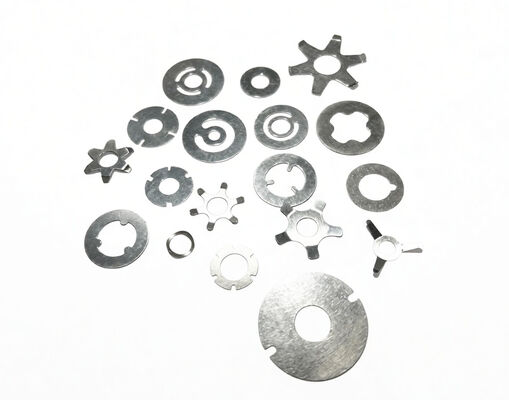
XIAYI Flat Surface Shock Valve Shims are manufactured with exceptional surface planarity, ensuring reliable, leak-free sealing against the damper valve piston face. The flatness quality of a shim directly determines the precision of low-speed damping control — any surface irregularity creates unintended bleed paths that compromise the engineered damping curve. Our shims are produced through precision stamping and photo etching technologies, with surface flatness verified by 2D gauge measurement. Available in multiple materials (brass, bronze, copper, hardened metals, stainless steel, alloy) with thickness from 0.02mm, these shims meet the most demanding surface quality requirements in the industry.
Surface Quality Challenges We ResolveChallenge 1: Unintended Bleed Paths from Surface Irregularities — Even microscopic surface deviations on a shim create uncontrolled oil bypass paths, causing inconsistent low-speed damping and unpredictable vehicle dynamics. XIAYI's flat surface shims eliminate this variability, ensuring the damper behaves exactly as designed.
Challenge 2: Inconsistent Preload Across the Valve Face — When a shim is not perfectly flat, the clamping preload is unevenly distributed, leading to asymmetric valve opening and potential shim edge chipping. Our planar surface tolerance ensures uniform clamping force distribution and predictable valve behavior.
Challenge 3: Sealing Failure in Check Valve Applications — Shim-type check valves rely on the shim making complete circumferential contact with the valve seat. Any surface irregularity creates a leak path that degrades check valve function, particularly at low Delta-P conditions where sealing force is minimal.
| Parameter | Specification |
|---|---|
| Material Options | Brass, Bronze, Copper, Hardened Metals, Stainless Steel, Alloy |
| Thickness Range | 0.02mm – 0.5mm (customizable) |
| Shape Options | Hexagon, Oval, Round, Rectangle, Square (customizable) |
| Manufacturing Process | Chemical Etching, Photo Etching, Laser Cutting, Stamping |
| Minimum Feature Size | Open hole: d=0.1mm; Line width: 0.08mm |
| Precision Tolerance | ±0.03mm (standard), approx. 20% of material thickness |
| Lead Time | Samples 4-6 days; Mass production within 1 week |
Our photo etching process delivers superior edge quality without the burrs or mechanical stress associated with traditional stamping. This is particularly critical for ultra-thin shims (0.02mm+), where stamping-induced stress can cause warping. For thicker gauges, our precision stamping lines maintain flatness through controlled material feed and optimized tool clearances. Every batch is verified with 2D gauge measurement for planarity and dimensional accuracy.
Frequently Asked QuestionsQ: How do you measure and guarantee surface flatness?
We use 2D optical gauge measurement to verify planarity. Shims are checked against the specified flatness tolerance (typically within a few microns) on a sampling basis per AQL standards. For critical applications, 100% inspection can be arranged. Flatness certification data is included in the inspection report.
Q: What is the difference between photo etching and stamping for shim production?
Photo etching (chemical etching) is a burr-free, stress-free process ideal for ultra-thin materials (0.02mm+) and complex geometries with fine features. Stamping is more cost-effective for thicker materials and higher volumes. We recommend the optimal process based on your material, thickness, geometry, and volume requirements.
Q: Can you produce shims with non-round shapes?
Yes. We manufacture hexagon, oval, rectangle, square, and fully customized shapes. Photo etching is particularly well-suited for complex profiles, while stamping excels at high-volume production of simpler geometries. Provide your drawing for a process recommendation.
Q: What is the minimum hole diameter you can produce?
Our minimum open hole diameter is 0.1mm, with a minimum line/land width of 0.08mm. These capabilities are achieved through our photo etching process. For stamping, minimum feature sizes depend on material thickness and are evaluated on a case-by-case basis.
Q: Do photo-etched shims have the same mechanical properties as stamped shims?
The base material properties are identical — the difference is in the manufacturing method. Photo etching does not introduce work hardening or residual stress at the cut edge, which can actually be advantageous for fatigue-sensitive applications. Post-processing heat treatment can be applied to either method to achieve target mechanical properties.
| MOQ: | 5000pcs |
| Price: | negotiation |
| Standard Packaging: | Standard exporting package |
| Delivery Period: | 30 working days for new samples |
| Payment Method: | T/T,Western Union |
| Supply Capacity: | 50,000pcs per month |
XIAYI Flat Surface Shock Valve Shims are manufactured with exceptional surface planarity, ensuring reliable, leak-free sealing against the damper valve piston face. The flatness quality of a shim directly determines the precision of low-speed damping control — any surface irregularity creates unintended bleed paths that compromise the engineered damping curve. Our shims are produced through precision stamping and photo etching technologies, with surface flatness verified by 2D gauge measurement. Available in multiple materials (brass, bronze, copper, hardened metals, stainless steel, alloy) with thickness from 0.02mm, these shims meet the most demanding surface quality requirements in the industry.
Surface Quality Challenges We ResolveChallenge 1: Unintended Bleed Paths from Surface Irregularities — Even microscopic surface deviations on a shim create uncontrolled oil bypass paths, causing inconsistent low-speed damping and unpredictable vehicle dynamics. XIAYI's flat surface shims eliminate this variability, ensuring the damper behaves exactly as designed.
Challenge 2: Inconsistent Preload Across the Valve Face — When a shim is not perfectly flat, the clamping preload is unevenly distributed, leading to asymmetric valve opening and potential shim edge chipping. Our planar surface tolerance ensures uniform clamping force distribution and predictable valve behavior.
Challenge 3: Sealing Failure in Check Valve Applications — Shim-type check valves rely on the shim making complete circumferential contact with the valve seat. Any surface irregularity creates a leak path that degrades check valve function, particularly at low Delta-P conditions where sealing force is minimal.
| Parameter | Specification |
|---|---|
| Material Options | Brass, Bronze, Copper, Hardened Metals, Stainless Steel, Alloy |
| Thickness Range | 0.02mm – 0.5mm (customizable) |
| Shape Options | Hexagon, Oval, Round, Rectangle, Square (customizable) |
| Manufacturing Process | Chemical Etching, Photo Etching, Laser Cutting, Stamping |
| Minimum Feature Size | Open hole: d=0.1mm; Line width: 0.08mm |
| Precision Tolerance | ±0.03mm (standard), approx. 20% of material thickness |
| Lead Time | Samples 4-6 days; Mass production within 1 week |
Our photo etching process delivers superior edge quality without the burrs or mechanical stress associated with traditional stamping. This is particularly critical for ultra-thin shims (0.02mm+), where stamping-induced stress can cause warping. For thicker gauges, our precision stamping lines maintain flatness through controlled material feed and optimized tool clearances. Every batch is verified with 2D gauge measurement for planarity and dimensional accuracy.
Frequently Asked QuestionsQ: How do you measure and guarantee surface flatness?
We use 2D optical gauge measurement to verify planarity. Shims are checked against the specified flatness tolerance (typically within a few microns) on a sampling basis per AQL standards. For critical applications, 100% inspection can be arranged. Flatness certification data is included in the inspection report.
Q: What is the difference between photo etching and stamping for shim production?
Photo etching (chemical etching) is a burr-free, stress-free process ideal for ultra-thin materials (0.02mm+) and complex geometries with fine features. Stamping is more cost-effective for thicker materials and higher volumes. We recommend the optimal process based on your material, thickness, geometry, and volume requirements.
Q: Can you produce shims with non-round shapes?
Yes. We manufacture hexagon, oval, rectangle, square, and fully customized shapes. Photo etching is particularly well-suited for complex profiles, while stamping excels at high-volume production of simpler geometries. Provide your drawing for a process recommendation.
Q: What is the minimum hole diameter you can produce?
Our minimum open hole diameter is 0.1mm, with a minimum line/land width of 0.08mm. These capabilities are achieved through our photo etching process. For stamping, minimum feature sizes depend on material thickness and are evaluated on a case-by-case basis.
Q: Do photo-etched shims have the same mechanical properties as stamped shims?
The base material properties are identical — the difference is in the manufacturing method. Photo etching does not introduce work hardening or residual stress at the cut edge, which can actually be advantageous for fatigue-sensitive applications. Post-processing heat treatment can be applied to either method to achieve target mechanical properties.