logo
Products
PRODUCTS DETAILS
Home > Products >
Heavy Duty DU Bushing for Oscillating Automotive Damper Applications

Heavy Duty DU Bushing for Oscillating Automotive Damper Applications

MOQ: 500pcs
Price: negotiation
Standard Packaging: Wood case for every 8ctns / 12ctns / 16ctns for sea shipment
Delivery Period: Two weeks after received your payment
Payment Method: T/T
Supply Capacity: 50,000pcs per month
Detail Information
Place of Origin
Ningbo, China
Brand Name
XIAYI
Certification
IATF16949:2016
Model Number
DP-4
Product Name:
Bushing
Bush Layer:
PTFE, PTFE, POM Plastic, Tin, Zinc
Application:
Heavy Vehicle
Surface:
Cooper Plating, Zinc Plating
Shape:
Cylinder, Thrust Pad
Lubricating:
PTFE, POM, Graphite
Coating:
Spray PTFE
Standard:
DIN 1494
Product Description
DU Bushing Engineered for Oscillating Automotive Damper Duty

Model DP-4 / SF-1D | Brand XIAYI | Certified IATF16949:2016

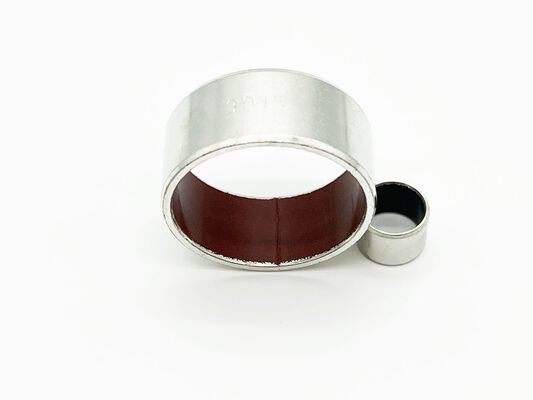
The DP-4 DU bushing is a maintenance-free, self-lubricating plain bearing built for damper rods, suspension pivots, and linkage systems that run in continuous oscillating motion. Its tri-layer composite — a low-carbon steel backing, a sintered porous bronze interlayer, and a PTFE-based anti-friction running surface — delivers stable, low-friction guidance from -195oC to +280oC without external grease or oil systems.

Performance at a Glance
-195oC to +280oCOperating temperature range
250 N/mm²Static load capacity
140 N/mm²Dynamic load capacity
0.04 – 0.20Coefficient of friction, dry running
How the Tri-Layer System Works

Every layer has a dedicated role, so the bushing keeps performing precisely when operating conditions become demanding:

  1. PTFE + fibre surface layer (0.01 – 0.03 mm): a self-lubricating anti-friction face that transfers a micro-thin film onto the mating shaft, lowering friction and shielding both components from wear.
  2. Sintered porous bronze interlayer (0.20 – 0.35 mm): conducts heat away from the contact zone, stores lubricant as a built-in reserve, and bonds the steel backing to the PTFE layer.
  3. Low-carbon steel backing: carries heavy loads, holds dimensional stability under stress, and dissipates heat into the housing.
  4. Copper/tin plating (0.002 mm): protects the steel backing against corrosion in humid or chemically exposed assemblies.
Technical Specifications
ParameterValue
ModelDP-4 / SF-1D
Operating Temperature Range-195oC to +280oC
Load Capacity (Static)Up to 250 N/mm²
Load Capacity (Dynamic)Up to 140 N/mm²
Max Sliding Speed (Dry)2.5 m/s
Coefficient of Friction (Dry)0.04 – 0.20
Surface Layer Thickness0.01 – 0.03 mm
Shaft Tolerance Recommendationh7 – h9
Housing Tolerance RecommendationH7
Shape OptionsCylindrical, Flanged, Thrust Washer
Common Operating Concerns, Answered
"Oscillating motion pushes grease out of the contact zone, so greased bushings need frequent re-lubrication."
The DP-4 lubricates itself. The PTFE surface re-forms its transfer film on the shaft during every oscillation cycle, keeping friction low and consistent without scheduled maintenance access.
"High ambient heat in engine bays and exhaust areas causes standard bushings to seize or soften."
With an upper limit of 280oC, the DP-4 holds its dimensional stability and friction performance far above the thermal threshold of greased bronze. The steel backing continuously conducts heat out of the interface.
"Pivot points in sealed assemblies cannot be reached for periodic lubrication."
The DP-4 is designed for fit-and-forget installation. No grease nipples, oil lines, or lubrication schedules are required, while the sintered bronze interlayer acts as a reserve lubricant reservoir for extended service.
"Startup shock loads deform plain bearings and leave permanent marks on the contact surface."
The steel-backed composite handles static loads up to 250 N/mm² without permanent deformation, resisting brinelling while the PTFE layer delivers immediate low-friction sliding the moment movement begins.
Where It Excels
  • Automotive dampers and shock absorber pivot points
  • Suspension linkages, spring shackles, and kingpin bushings
  • Steering columns and pedal pivot assemblies
  • Heavy vehicle and commercial chassis systems
  • Agricultural and construction equipment linkages
  • Industrial automation joints and conveyor rollers
Built for OEM and Aftermarket Programs

Engineering support

  • Custom inner diameter, outer diameter, length, and flange dimensions
  • Material and tolerance selection guidance for your housing and shaft
  • Prototype samples for validation before volume production

Production capability

  • IATF16949:2016 certified quality system
  • Monthly capacity above 50,000 pieces
  • Standard lead time of approximately 2 weeks after drawing approval
Frequently Asked Questions
Q: How does a DU bushing behave under oscillating motion compared with continuous rotation?
The PTFE transfer film is equally effective in both motion types. Oscillating duty actually benefits the most, because the film is re-deposited across the same contact zone on every cycle, keeping friction low throughout the service life.
Q: What shaft hardness and finish do you recommend for DP-4 bushings?
Hardened shaft surfaces of approximately 45 HRC or above with a finish of Ra 0.2 – 0.4 µm deliver the longest wear life. Recommended shaft tolerance is h7 – h9 with an H7 housing bore.
Q: Can the DP-4 handle edge loading or misalignment in damper pivots?
Yes. Flanged and thrust washer versions distribute axial loads across a wider area. For severe edge loading conditions, our engineering team can review the length-to-diameter ratio and recommend the optimal configuration.
Q: Is a run-in period required before applying full load?
A short run-in at moderate load is recommended to establish the transfer film on the mating shaft. After this brief period, the bushing operates at its full rated load and speed.
Q: How are DP-4 bushings installed?
They are press-fitted into an H7 housing bore. Chamfered housing edges ease insertion and prevent edge damage. For most applications no additional locking devices are needed once the press fit is achieved.
Q: What is the lead time for OEM damper production orders?
Standard delivery is approximately 2 weeks from drawing approval and payment. Production capacity exceeds 50,000 pieces per month, ensuring reliable supply for scheduled OEM programs.

For custom drawings, application reviews, or sample requests, contact the XIAYI engineering team with your dimensional and operating requirements.

Products
PRODUCTS DETAILS
Heavy Duty DU Bushing for Oscillating Automotive Damper Applications
MOQ: 500pcs
Price: negotiation
Standard Packaging: Wood case for every 8ctns / 12ctns / 16ctns for sea shipment
Delivery Period: Two weeks after received your payment
Payment Method: T/T
Supply Capacity: 50,000pcs per month
Detail Information
Place of Origin
Ningbo, China
Brand Name
XIAYI
Certification
IATF16949:2016
Model Number
DP-4
Product Name:
Bushing
Bush Layer:
PTFE, PTFE, POM Plastic, Tin, Zinc
Application:
Heavy Vehicle
Surface:
Cooper Plating, Zinc Plating
Shape:
Cylinder, Thrust Pad
Lubricating:
PTFE, POM, Graphite
Coating:
Spray PTFE
Standard:
DIN 1494
Minimum Order Quantity:
500pcs
Price:
negotiation
Packaging Details:
Wood case for every 8ctns / 12ctns / 16ctns for sea shipment
Delivery Time:
Two weeks after received your payment
Payment Terms:
T/T
Supply Ability:
50,000pcs per month
Product Description
DU Bushing Engineered for Oscillating Automotive Damper Duty

Model DP-4 / SF-1D | Brand XIAYI | Certified IATF16949:2016

The DP-4 DU bushing is a maintenance-free, self-lubricating plain bearing built for damper rods, suspension pivots, and linkage systems that run in continuous oscillating motion. Its tri-layer composite — a low-carbon steel backing, a sintered porous bronze interlayer, and a PTFE-based anti-friction running surface — delivers stable, low-friction guidance from -195oC to +280oC without external grease or oil systems.

Performance at a Glance
-195oC to +280oCOperating temperature range
250 N/mm²Static load capacity
140 N/mm²Dynamic load capacity
0.04 – 0.20Coefficient of friction, dry running
How the Tri-Layer System Works

Every layer has a dedicated role, so the bushing keeps performing precisely when operating conditions become demanding:

  1. PTFE + fibre surface layer (0.01 – 0.03 mm): a self-lubricating anti-friction face that transfers a micro-thin film onto the mating shaft, lowering friction and shielding both components from wear.
  2. Sintered porous bronze interlayer (0.20 – 0.35 mm): conducts heat away from the contact zone, stores lubricant as a built-in reserve, and bonds the steel backing to the PTFE layer.
  3. Low-carbon steel backing: carries heavy loads, holds dimensional stability under stress, and dissipates heat into the housing.
  4. Copper/tin plating (0.002 mm): protects the steel backing against corrosion in humid or chemically exposed assemblies.
Technical Specifications
ParameterValue
ModelDP-4 / SF-1D
Operating Temperature Range-195oC to +280oC
Load Capacity (Static)Up to 250 N/mm²
Load Capacity (Dynamic)Up to 140 N/mm²
Max Sliding Speed (Dry)2.5 m/s
Coefficient of Friction (Dry)0.04 – 0.20
Surface Layer Thickness0.01 – 0.03 mm
Shaft Tolerance Recommendationh7 – h9
Housing Tolerance RecommendationH7
Shape OptionsCylindrical, Flanged, Thrust Washer
Common Operating Concerns, Answered
"Oscillating motion pushes grease out of the contact zone, so greased bushings need frequent re-lubrication."
The DP-4 lubricates itself. The PTFE surface re-forms its transfer film on the shaft during every oscillation cycle, keeping friction low and consistent without scheduled maintenance access.
"High ambient heat in engine bays and exhaust areas causes standard bushings to seize or soften."
With an upper limit of 280oC, the DP-4 holds its dimensional stability and friction performance far above the thermal threshold of greased bronze. The steel backing continuously conducts heat out of the interface.
"Pivot points in sealed assemblies cannot be reached for periodic lubrication."
The DP-4 is designed for fit-and-forget installation. No grease nipples, oil lines, or lubrication schedules are required, while the sintered bronze interlayer acts as a reserve lubricant reservoir for extended service.
"Startup shock loads deform plain bearings and leave permanent marks on the contact surface."
The steel-backed composite handles static loads up to 250 N/mm² without permanent deformation, resisting brinelling while the PTFE layer delivers immediate low-friction sliding the moment movement begins.
Where It Excels
  • Automotive dampers and shock absorber pivot points
  • Suspension linkages, spring shackles, and kingpin bushings
  • Steering columns and pedal pivot assemblies
  • Heavy vehicle and commercial chassis systems
  • Agricultural and construction equipment linkages
  • Industrial automation joints and conveyor rollers
Built for OEM and Aftermarket Programs

Engineering support

  • Custom inner diameter, outer diameter, length, and flange dimensions
  • Material and tolerance selection guidance for your housing and shaft
  • Prototype samples for validation before volume production

Production capability

  • IATF16949:2016 certified quality system
  • Monthly capacity above 50,000 pieces
  • Standard lead time of approximately 2 weeks after drawing approval
Frequently Asked Questions
Q: How does a DU bushing behave under oscillating motion compared with continuous rotation?
The PTFE transfer film is equally effective in both motion types. Oscillating duty actually benefits the most, because the film is re-deposited across the same contact zone on every cycle, keeping friction low throughout the service life.
Q: What shaft hardness and finish do you recommend for DP-4 bushings?
Hardened shaft surfaces of approximately 45 HRC or above with a finish of Ra 0.2 – 0.4 µm deliver the longest wear life. Recommended shaft tolerance is h7 – h9 with an H7 housing bore.
Q: Can the DP-4 handle edge loading or misalignment in damper pivots?
Yes. Flanged and thrust washer versions distribute axial loads across a wider area. For severe edge loading conditions, our engineering team can review the length-to-diameter ratio and recommend the optimal configuration.
Q: Is a run-in period required before applying full load?
A short run-in at moderate load is recommended to establish the transfer film on the mating shaft. After this brief period, the bushing operates at its full rated load and speed.
Q: How are DP-4 bushings installed?
They are press-fitted into an H7 housing bore. Chamfered housing edges ease insertion and prevent edge damage. For most applications no additional locking devices are needed once the press fit is achieved.
Q: What is the lead time for OEM damper production orders?
Standard delivery is approximately 2 weeks from drawing approval and payment. Production capacity exceeds 50,000 pieces per month, ensuring reliable supply for scheduled OEM programs.

For custom drawings, application reviews, or sample requests, contact the XIAYI engineering team with your dimensional and operating requirements.

宁波夏亿机电科技有限公司