| MOQ: | 1,000pcs |
| Price: | Can be discussed |
| Standard Packaging: | Standard export package |
| Delivery Period: | Within two weeks |
| Payment Method: | L/C,T/T,D/A,D/P |
| Supply Capacity: | 100000pcs per month |
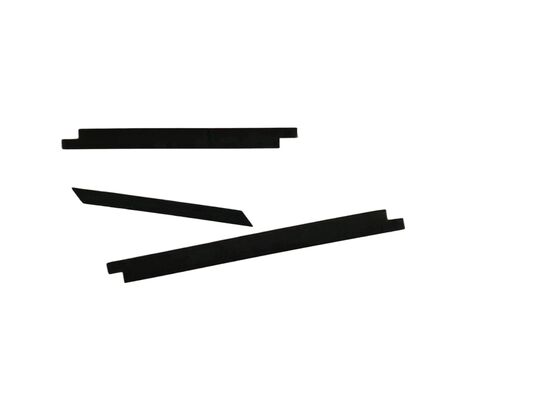
PTFE piston bands are functional polytetrafluoroethylene components designed for the outer circumference of automotive and motorcycle shock absorber pistons. They are installed in designated piston grooves and form a sliding interface with the inner wall of the working cylinder.
For shock absorber piston manufacturers, PTFE bands must meet more than material performance requirements. They must also be suitable for subsequent banding operations, including dimensional accuracy, edge condition, and end-joint geometry.
Variations in band length, cutting burrs, or joint profiles may increase installation adjustments and affect consistency during volume production.
XIAYI supplies filled PTFE piston bands for shock absorber applications, with customized copper-powder-filled material options subject to project requirements. Band widths, thicknesses, lengths, and end profiles can be machined according to customer drawings.
The products are intended for automotive shock absorber pistons, motorcycle front forks, and rear shock absorber piston applications.
PTFE bands can be cut and machined to specified dimensions based on customer piston designs.
Main dimensional control items include band width, thickness, developed length, and end profile.
For volume banding operations, consistent dimensional specifications help reduce installation adjustments and support repeatable processing across production batches.
The edge condition is an important consideration for PTFE band installation.
Machining inspection can cover edge integrity, visible burrs, end notches, and localized deformation to ensure compliance with the agreed appearance and dimensional requirements.
Depending on piston design and banding method, PTFE bands can be manufactured with different end configurations, including angled cuts and stepped joints.
The final profile should be confirmed against the product drawing and installation method. For volume production, sample evaluation is recommended to approve the joint dimensions and assembly condition.
XIAYI can evaluate filled PTFE material options, including customized copper-powder-filled formulations.
Filler type and proportion should be defined according to the project requirements and verified through the relevant material specifications and test results.
Different formulations may have different density, hardness, tensile, friction, and wear characteristics. Material versions should therefore be established during product development.
Band dimensions, quantities, packaging, and product identification can be reviewed according to customer requirements.
For automated piston banding lines, the product form should also be checked against equipment feeding, picking, and banding methods to ensure that the supplied band specifications are compatible with the actual production process.
The following values are reference data from existing filled PTFE product information. Actual copper-filled formulations should be verified against the corresponding compound specification and test report.
Parameter |
Reference Data |
Technical Notes |
Base material |
Filled PTFE |
Filled polytetrafluoroethylene |
Optional filler |
Copper powder |
Customized formulation |
Appearance |
Black |
Black PTFE bands |
Material density |
2.06–2.19 g/cm³ |
Existing product reference |
Material hardness |
57–61 |
Hardness scale to be confirmed |
Tensile strength |
≥18 MPa |
Existing reference material data |
Elongation at break |
≥160% |
Existing reference material data |
Friction coefficient |
<0.2 |
Reference value; test conditions to be confirmed |
Wear loss |
<50 mg |
Reference value; test method to be confirmed |
Reference maximum working temperature |
260°C |
Existing material record; confirm for the selected formulation |
Parameter |
Specification |
Confirmation Method |
Band width |
Custom, mm |
Customer drawing |
Band thickness |
Custom, mm |
Customer drawing |
Cutting length |
Custom, mm |
Piston design |
End-cut angle |
Custom, ° |
Joint design |
End profile |
Angled cut, stepped end, etc. |
Drawing or sample |
Edge condition |
According to approved sample and drawing |
Burr and notch inspection |
Dimensional tolerances |
Confirmed by drawing, mm |
Product specification |
Supply form |
According to order requirements |
Cut parts and packaging format |
PTFE band inspection should cover material properties, machining dimensions, and final appearance.
Inspection Item |
Inspection Content |
Main Objective |
Material verification |
PTFE formulation and filler specification |
Confirm the approved material |
Density testing |
g/cm³ |
Verify material specification |
Hardness testing |
Agreed hardness scale |
Confirm material hardness |
Band width |
mm |
Meet drawing requirements |
Band thickness |
mm |
Meet drawing requirements |
Cutting length |
mm |
Maintain dimensional consistency |
End profile |
Angle and joint geometry |
Match assembly design |
Edge appearance |
Burrs, notches, and localized damage |
Identify machining defects |
Packaging and identification |
Specification, quantity, and batch |
Support storage and production use |
Application |
Supply Considerations |
Automotive Front Shock Absorber Pistons |
PTFE bands matched to piston groove dimensions |
Automotive Rear Shock Absorber Pistons |
Material and dimensions based on product drawings |
Motorcycle Front Fork Pistons |
Cut sizes for different piston configurations |
Motorcycle Rear Shock Absorber Pistons |
End-joint and length requirements based on banding process |
OEM Piston Production |
Defined specifications and volume supply |
Automated Banding Lines |
Band dimensions compatible with feeding, gripping, and installation |
To confirm the product specification and prepare a quotation, please provide:
2D drawing or 3D model of the piston.
Required PTFE band width and thickness.
Developed length of each band.
End-joint configuration and cutting angle.
PTFE material formulation and copper filler requirements.
Critical dimensional tolerances and edge quality standards.
Expected order quantity and packaging requirements.
Whether piston banding equipment is also required.
XIAYI can review the PTFE material, cutting dimensions, and machining requirements based on customer drawings and applications, supporting customized band supply for automotive and motorcycle shock absorber piston manufacturers.
Q1: Can PTFE bands be cut to a specified length?
Yes. Band width, thickness, and cutting length can be confirmed according to the piston design and customer drawings, together with the required machining tolerances.
Q2: Can PTFE bands be supplied with different joint profiles?
Angled-cut ends, stepped joints, and other configurations can be evaluated according to the product design. Final geometry follows the approved drawing.
Q3: Can copper-filled PTFE material be supplied?
Customized filled PTFE formulations containing copper powder can be evaluated. The filler proportion and performance must be confirmed through the material specification.
Q4: How can compatibility with an automatic banding machine be confirmed?
Band width, thickness, length, and end profile should be reviewed against the machine's feeding, gripping, and banding methods. Sample processing is recommended before volume production.
Q5: Can the same specification be supplied for recurring orders?
Yes. Repeat supply can be organized based on approved drawings, material specifications, and inspection requirements.
| MOQ: | 1,000pcs |
| Price: | Can be discussed |
| Standard Packaging: | Standard export package |
| Delivery Period: | Within two weeks |
| Payment Method: | L/C,T/T,D/A,D/P |
| Supply Capacity: | 100000pcs per month |
PTFE piston bands are functional polytetrafluoroethylene components designed for the outer circumference of automotive and motorcycle shock absorber pistons. They are installed in designated piston grooves and form a sliding interface with the inner wall of the working cylinder.
For shock absorber piston manufacturers, PTFE bands must meet more than material performance requirements. They must also be suitable for subsequent banding operations, including dimensional accuracy, edge condition, and end-joint geometry.
Variations in band length, cutting burrs, or joint profiles may increase installation adjustments and affect consistency during volume production.
XIAYI supplies filled PTFE piston bands for shock absorber applications, with customized copper-powder-filled material options subject to project requirements. Band widths, thicknesses, lengths, and end profiles can be machined according to customer drawings.
The products are intended for automotive shock absorber pistons, motorcycle front forks, and rear shock absorber piston applications.
PTFE bands can be cut and machined to specified dimensions based on customer piston designs.
Main dimensional control items include band width, thickness, developed length, and end profile.
For volume banding operations, consistent dimensional specifications help reduce installation adjustments and support repeatable processing across production batches.
The edge condition is an important consideration for PTFE band installation.
Machining inspection can cover edge integrity, visible burrs, end notches, and localized deformation to ensure compliance with the agreed appearance and dimensional requirements.
Depending on piston design and banding method, PTFE bands can be manufactured with different end configurations, including angled cuts and stepped joints.
The final profile should be confirmed against the product drawing and installation method. For volume production, sample evaluation is recommended to approve the joint dimensions and assembly condition.
XIAYI can evaluate filled PTFE material options, including customized copper-powder-filled formulations.
Filler type and proportion should be defined according to the project requirements and verified through the relevant material specifications and test results.
Different formulations may have different density, hardness, tensile, friction, and wear characteristics. Material versions should therefore be established during product development.
Band dimensions, quantities, packaging, and product identification can be reviewed according to customer requirements.
For automated piston banding lines, the product form should also be checked against equipment feeding, picking, and banding methods to ensure that the supplied band specifications are compatible with the actual production process.
The following values are reference data from existing filled PTFE product information. Actual copper-filled formulations should be verified against the corresponding compound specification and test report.
Parameter |
Reference Data |
Technical Notes |
Base material |
Filled PTFE |
Filled polytetrafluoroethylene |
Optional filler |
Copper powder |
Customized formulation |
Appearance |
Black |
Black PTFE bands |
Material density |
2.06–2.19 g/cm³ |
Existing product reference |
Material hardness |
57–61 |
Hardness scale to be confirmed |
Tensile strength |
≥18 MPa |
Existing reference material data |
Elongation at break |
≥160% |
Existing reference material data |
Friction coefficient |
<0.2 |
Reference value; test conditions to be confirmed |
Wear loss |
<50 mg |
Reference value; test method to be confirmed |
Reference maximum working temperature |
260°C |
Existing material record; confirm for the selected formulation |
Parameter |
Specification |
Confirmation Method |
Band width |
Custom, mm |
Customer drawing |
Band thickness |
Custom, mm |
Customer drawing |
Cutting length |
Custom, mm |
Piston design |
End-cut angle |
Custom, ° |
Joint design |
End profile |
Angled cut, stepped end, etc. |
Drawing or sample |
Edge condition |
According to approved sample and drawing |
Burr and notch inspection |
Dimensional tolerances |
Confirmed by drawing, mm |
Product specification |
Supply form |
According to order requirements |
Cut parts and packaging format |
PTFE band inspection should cover material properties, machining dimensions, and final appearance.
Inspection Item |
Inspection Content |
Main Objective |
Material verification |
PTFE formulation and filler specification |
Confirm the approved material |
Density testing |
g/cm³ |
Verify material specification |
Hardness testing |
Agreed hardness scale |
Confirm material hardness |
Band width |
mm |
Meet drawing requirements |
Band thickness |
mm |
Meet drawing requirements |
Cutting length |
mm |
Maintain dimensional consistency |
End profile |
Angle and joint geometry |
Match assembly design |
Edge appearance |
Burrs, notches, and localized damage |
Identify machining defects |
Packaging and identification |
Specification, quantity, and batch |
Support storage and production use |
Application |
Supply Considerations |
Automotive Front Shock Absorber Pistons |
PTFE bands matched to piston groove dimensions |
Automotive Rear Shock Absorber Pistons |
Material and dimensions based on product drawings |
Motorcycle Front Fork Pistons |
Cut sizes for different piston configurations |
Motorcycle Rear Shock Absorber Pistons |
End-joint and length requirements based on banding process |
OEM Piston Production |
Defined specifications and volume supply |
Automated Banding Lines |
Band dimensions compatible with feeding, gripping, and installation |
To confirm the product specification and prepare a quotation, please provide:
2D drawing or 3D model of the piston.
Required PTFE band width and thickness.
Developed length of each band.
End-joint configuration and cutting angle.
PTFE material formulation and copper filler requirements.
Critical dimensional tolerances and edge quality standards.
Expected order quantity and packaging requirements.
Whether piston banding equipment is also required.
XIAYI can review the PTFE material, cutting dimensions, and machining requirements based on customer drawings and applications, supporting customized band supply for automotive and motorcycle shock absorber piston manufacturers.
Q1: Can PTFE bands be cut to a specified length?
Yes. Band width, thickness, and cutting length can be confirmed according to the piston design and customer drawings, together with the required machining tolerances.
Q2: Can PTFE bands be supplied with different joint profiles?
Angled-cut ends, stepped joints, and other configurations can be evaluated according to the product design. Final geometry follows the approved drawing.
Q3: Can copper-filled PTFE material be supplied?
Customized filled PTFE formulations containing copper powder can be evaluated. The filler proportion and performance must be confirmed through the material specification.
Q4: How can compatibility with an automatic banding machine be confirmed?
Band width, thickness, length, and end profile should be reviewed against the machine's feeding, gripping, and banding methods. Sample processing is recommended before volume production.
Q5: Can the same specification be supplied for recurring orders?
Yes. Repeat supply can be organized based on approved drawings, material specifications, and inspection requirements.