logo
Products
PRODUCTS DETAILS
Home > Products >
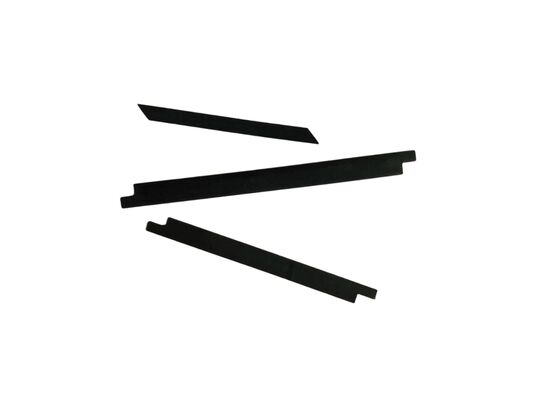
Copper-Filled PTFE Piston Bands for Hydraulic Shock Absorber Applications

Copper-Filled PTFE Piston Bands for Hydraulic Shock Absorber Applications

MOQ: 1,000pcs
Price: Can be discussed
Standard Packaging: Standard export package
Delivery Period: Within two weeks
Payment Method: L/C,T/T,D/A,D/P
Supply Capacity: 100000pcs per month
Detail Information
Place of Origin
Ningbo, China
Brand Name
XIAYI
Certification
IATF16949:2016
Model Number
Customized PTFE bands
Material:
PTFE;Bronze Compound
Production:
Punch Machine
Yield Strength:
23MPa
Style:
Sealing Strip
Hardness:
57-61
Surface:
Smooth
Length:
116mm
Density:
2.2g/cm3
Product Description
1. Product Overview

PTFE piston bands are functional polymer components installed in the circumferential grooves of automotive and motorcycle shock absorber pistons. They create a sliding contact interface between the piston and the inner wall of the working cylinder.

During hydraulic damper operation, PTFE bands are exposed to repeated reciprocating movement, hydraulic oil, temperature changes, and continuous contact loads. Material selection therefore requires more than considering the basic properties of PTFE. Filler formulation, piston geometry, and actual operating conditions must also be evaluated.

XIAYI supplies filled PTFE piston bands for shock absorber applications, including customized copper-powder-filled formulations according to project requirements. The bands can be manufactured to customer drawings and component specifications.

They are intended for automotive and motorcycle shock absorber pistons, supporting material selection and customized banding solutions for different hydraulic suspension applications.

2. Material and Application Performance
2.1 Material Selection for Hydraulic Oil Exposure

PTFE bands installed in shock absorber pistons may remain in prolonged contact with hydraulic damping oil.

Material selection should consider:

Type and chemical composition of the damping oil.

Copper filler content and other additives in the PTFE formulation.

Operating temperature and temperature variations.

Contact conditions between the band and cylinder wall.

Dimensional and surface changes during repeated reciprocating operation.

For different hydraulic oils and service environments, material compatibility should be confirmed through appropriate fluid exposure tests and component validation rather than inferred from the PTFE base material alone.

2.2 Dimensional Stability under Temperature Changes

Shock absorber operation involves temperature changes that can affect polymer material dimensions and assembly fit.

For applications with defined temperature requirements, dimensional measurements, visual inspections, and material testing can be conducted at specified temperatures to evaluate suitability.

Existing filled PTFE product information records a reference maximum working temperature of 260°C. This value should not be treated as a continuous operating-temperature guarantee for every copper-filled formulation. Actual suitability depends on the compound, service medium, and validation results.

2.3 Friction and Wear Performance

PTFE has inherent self-lubricating properties and is suitable for sliding-contact interfaces in shock absorber pistons.

For copper-filled PTFE compounds, filler content may influence hardness, mechanical properties, friction, and wear behavior.

Actual friction performance also depends on:

Piston-to-cylinder clearance.

Cylinder wall surface condition.

Hydraulic oil lubrication conditions.

Piston movement speed and contact load.

Material formulation.

Material friction testing should therefore be evaluated together with the actual banded piston assembly.

2.4 Customized Copper-Filled PTFE Compounds

XIAYI can evaluate customized copper-filled PTFE formulations according to project requirements.

Different filler ratios and material versions require separate specification confirmation. The density, hardness, and friction data of one compound should not automatically be applied to another formulation.

For applications with demanding operating conditions, the material version should be approved before sample machining and service-condition validation.

3. PTFE Band Material Specifications

The following figures are reference data from existing filled PTFE product information and should be verified against the selected material formulation.

Parameter

Reference Data

Technical Notes

Base material

Filled PTFE

Filled polytetrafluoroethylene

Filler option

Copper powder

Customized formulation

Appearance

Black

Black PTFE bands

Material density

2.06–2.19 g/cm³

Existing product reference

Material hardness

57–61

Hardness scale to be confirmed

Tensile strength

≥18 MPa

Existing reference material data

Elongation at break

≥160%

Existing reference material data

Friction coefficient

<0.2

Reference value; test conditions must be specified

Wear loss

<50 mg

Reference value; test method must be specified

Reference maximum working temperature

260°C

Existing material record; actual application limit depends on formulation

Band width

Customized, mm

According to piston design

Band thickness

Customized, mm

According to groove and assembly requirements

Band length

Customized, mm

Based on piston dimensions and joint design

Applications

Automotive and motorcycle shock absorbers

For piston banding applications

4. Material Compatibility and Validation

For hydraulic shock absorber PTFE bands, validation should cover both the material compound and the completed banded piston assembly.

4.1 Recommended Material Tests

Test Item

Recommended Evaluation

Main Purpose

Density testing

g/cm³

Confirm material batch specification

Hardness testing

Agreed hardness scale

Evaluate material hardness

Tensile testing

MPa and %

Check tensile strength and elongation

Hydraulic oil exposure

Customer-specified oil and temperature

Evaluate material compatibility

High-temperature dimensional change

Before-and-after measurements

Assess dimensional changes under heat

Friction testing

Defined load, speed, and lubrication

Evaluate sliding friction

Wear testing

Agreed test method

Evaluate material wear loss

4.2 Banded Piston Assembly Test Records

Existing XIAYI PTFE-banded piston product information records the following tests:

Test Item

Recorded Condition / Data

Stress cracking test

150°C * 500 h

Tensile load cycling test

39.2 MPa * 10,000 cycles

High-speed operation durability

1,000,000 cycles

Regular operation durability

3,000,000 cycles

Post-test inspection

No band peeling or breakage recorded

5. Manufacturing and Product Dimensions

PTFE band dimensions should be confirmed against the piston structure and banding process.

Parameter

Specification

Confirmation Basis

Band width

Customized, mm

Piston groove width

Band thickness

Customized, mm

Groove depth and target finished diameter

Developed band length

Customized, mm

Piston size and end-joint design

Joint configuration

Customized

Piston geometry and banding method

Edge condition

According to drawing or approved sample

Cutting and visual requirements

Finished piston diameter

According to drawing, mm

Cylinder fit requirements

Dimensional tolerances

According to product drawing, mm

Customer technical specification

6. Typical Applications

Application

Main Technical Considerations

Automotive Front Shock Absorber Pistons

Hydraulic oil compatibility and sliding fit

Automotive Rear Shock Absorber Pistons

Temperature variation and reciprocating conditions

Motorcycle Front Fork Pistons

Band dimensions matched to compact piston structures

Motorcycle Rear Shock Absorber Pistons

Material formulation and assembly condition

High-Temperature Damper Applications

Material stability under specified temperatures

OEM Shock Absorber Programs

Customized material, sample testing, and volume supply

7. Customization and Quotation Requirements

To evaluate the suitable PTFE material and band dimensions, please provide:

A piston drawing or physical sample.

Piston groove width, groove depth, and outside diameter.

Required PTFE band width, thickness, and length.

Copper-filled formulation or material specification.

Hydraulic damping oil type.

Expected operating temperature range.

Friction, wear, and durability requirements.

Expected order quantity and sample validation requirements.

XIAYI can evaluate PTFE formulations and band specifications based on customer drawings and actual operating conditions, supporting customized PTFE band supply for automotive and motorcycle shock absorber piston manufacturers.

8. Frequently Asked Questions

Q1: Can copper-filled PTFE bands be used in contact with shock absorber oil?

Suitability depends on copper content, PTFE formulation, hydraulic oil type, and operating temperature. Material compatibility should be evaluated using the actual oil.

Q2: What is the maximum working temperature of PTFE bands?

Existing filled PTFE product information records a reference maximum working temperature of 260°C. Long-term suitability may differ between formulations and should be confirmed using the material specification and operating conditions.

Q3: How can dimensional stability at high temperatures be evaluated?

A controlled thermal exposure test can be performed, with dimensional and visual measurements taken before and after exposure. The results can then be reviewed against the product drawing.

Q4: Is the friction coefficient of PTFE bands fixed?

No. Friction depends on material formulation, contact pressure, sliding speed, surface roughness, and lubrication medium. Measurements should be interpreted under defined test conditions.

Q5: Can PTFE material be selected according to the customer's hydraulic oil?

Yes. Material options can be reviewed according to the hydraulic oil and operating conditions. Final suitability should be confirmed through material testing and banded piston assembly validation.

Products
PRODUCTS DETAILS
Copper-Filled PTFE Piston Bands for Hydraulic Shock Absorber Applications
MOQ: 1,000pcs
Price: Can be discussed
Standard Packaging: Standard export package
Delivery Period: Within two weeks
Payment Method: L/C,T/T,D/A,D/P
Supply Capacity: 100000pcs per month
Detail Information
Place of Origin
Ningbo, China
Brand Name
XIAYI
Certification
IATF16949:2016
Model Number
Customized PTFE bands
Material:
PTFE;Bronze Compound
Production:
Punch Machine
Yield Strength:
23MPa
Style:
Sealing Strip
Hardness:
57-61
Surface:
Smooth
Length:
116mm
Density:
2.2g/cm3
Minimum Order Quantity:
1,000pcs
Price:
Can be discussed
Packaging Details:
Standard export package
Delivery Time:
Within two weeks
Payment Terms:
L/C,T/T,D/A,D/P
Supply Ability:
100000pcs per month
Product Description
1. Product Overview

PTFE piston bands are functional polymer components installed in the circumferential grooves of automotive and motorcycle shock absorber pistons. They create a sliding contact interface between the piston and the inner wall of the working cylinder.

During hydraulic damper operation, PTFE bands are exposed to repeated reciprocating movement, hydraulic oil, temperature changes, and continuous contact loads. Material selection therefore requires more than considering the basic properties of PTFE. Filler formulation, piston geometry, and actual operating conditions must also be evaluated.

XIAYI supplies filled PTFE piston bands for shock absorber applications, including customized copper-powder-filled formulations according to project requirements. The bands can be manufactured to customer drawings and component specifications.

They are intended for automotive and motorcycle shock absorber pistons, supporting material selection and customized banding solutions for different hydraulic suspension applications.

2. Material and Application Performance
2.1 Material Selection for Hydraulic Oil Exposure

PTFE bands installed in shock absorber pistons may remain in prolonged contact with hydraulic damping oil.

Material selection should consider:

Type and chemical composition of the damping oil.

Copper filler content and other additives in the PTFE formulation.

Operating temperature and temperature variations.

Contact conditions between the band and cylinder wall.

Dimensional and surface changes during repeated reciprocating operation.

For different hydraulic oils and service environments, material compatibility should be confirmed through appropriate fluid exposure tests and component validation rather than inferred from the PTFE base material alone.

2.2 Dimensional Stability under Temperature Changes

Shock absorber operation involves temperature changes that can affect polymer material dimensions and assembly fit.

For applications with defined temperature requirements, dimensional measurements, visual inspections, and material testing can be conducted at specified temperatures to evaluate suitability.

Existing filled PTFE product information records a reference maximum working temperature of 260°C. This value should not be treated as a continuous operating-temperature guarantee for every copper-filled formulation. Actual suitability depends on the compound, service medium, and validation results.

2.3 Friction and Wear Performance

PTFE has inherent self-lubricating properties and is suitable for sliding-contact interfaces in shock absorber pistons.

For copper-filled PTFE compounds, filler content may influence hardness, mechanical properties, friction, and wear behavior.

Actual friction performance also depends on:

Piston-to-cylinder clearance.

Cylinder wall surface condition.

Hydraulic oil lubrication conditions.

Piston movement speed and contact load.

Material formulation.

Material friction testing should therefore be evaluated together with the actual banded piston assembly.

2.4 Customized Copper-Filled PTFE Compounds

XIAYI can evaluate customized copper-filled PTFE formulations according to project requirements.

Different filler ratios and material versions require separate specification confirmation. The density, hardness, and friction data of one compound should not automatically be applied to another formulation.

For applications with demanding operating conditions, the material version should be approved before sample machining and service-condition validation.

3. PTFE Band Material Specifications

The following figures are reference data from existing filled PTFE product information and should be verified against the selected material formulation.

Parameter

Reference Data

Technical Notes

Base material

Filled PTFE

Filled polytetrafluoroethylene

Filler option

Copper powder

Customized formulation

Appearance

Black

Black PTFE bands

Material density

2.06–2.19 g/cm³

Existing product reference

Material hardness

57–61

Hardness scale to be confirmed

Tensile strength

≥18 MPa

Existing reference material data

Elongation at break

≥160%

Existing reference material data

Friction coefficient

<0.2

Reference value; test conditions must be specified

Wear loss

<50 mg

Reference value; test method must be specified

Reference maximum working temperature

260°C

Existing material record; actual application limit depends on formulation

Band width

Customized, mm

According to piston design

Band thickness

Customized, mm

According to groove and assembly requirements

Band length

Customized, mm

Based on piston dimensions and joint design

Applications

Automotive and motorcycle shock absorbers

For piston banding applications

4. Material Compatibility and Validation

For hydraulic shock absorber PTFE bands, validation should cover both the material compound and the completed banded piston assembly.

4.1 Recommended Material Tests

Test Item

Recommended Evaluation

Main Purpose

Density testing

g/cm³

Confirm material batch specification

Hardness testing

Agreed hardness scale

Evaluate material hardness

Tensile testing

MPa and %

Check tensile strength and elongation

Hydraulic oil exposure

Customer-specified oil and temperature

Evaluate material compatibility

High-temperature dimensional change

Before-and-after measurements

Assess dimensional changes under heat

Friction testing

Defined load, speed, and lubrication

Evaluate sliding friction

Wear testing

Agreed test method

Evaluate material wear loss

4.2 Banded Piston Assembly Test Records

Existing XIAYI PTFE-banded piston product information records the following tests:

Test Item

Recorded Condition / Data

Stress cracking test

150°C * 500 h

Tensile load cycling test

39.2 MPa * 10,000 cycles

High-speed operation durability

1,000,000 cycles

Regular operation durability

3,000,000 cycles

Post-test inspection

No band peeling or breakage recorded

5. Manufacturing and Product Dimensions

PTFE band dimensions should be confirmed against the piston structure and banding process.

Parameter

Specification

Confirmation Basis

Band width

Customized, mm

Piston groove width

Band thickness

Customized, mm

Groove depth and target finished diameter

Developed band length

Customized, mm

Piston size and end-joint design

Joint configuration

Customized

Piston geometry and banding method

Edge condition

According to drawing or approved sample

Cutting and visual requirements

Finished piston diameter

According to drawing, mm

Cylinder fit requirements

Dimensional tolerances

According to product drawing, mm

Customer technical specification

6. Typical Applications

Application

Main Technical Considerations

Automotive Front Shock Absorber Pistons

Hydraulic oil compatibility and sliding fit

Automotive Rear Shock Absorber Pistons

Temperature variation and reciprocating conditions

Motorcycle Front Fork Pistons

Band dimensions matched to compact piston structures

Motorcycle Rear Shock Absorber Pistons

Material formulation and assembly condition

High-Temperature Damper Applications

Material stability under specified temperatures

OEM Shock Absorber Programs

Customized material, sample testing, and volume supply

7. Customization and Quotation Requirements

To evaluate the suitable PTFE material and band dimensions, please provide:

A piston drawing or physical sample.

Piston groove width, groove depth, and outside diameter.

Required PTFE band width, thickness, and length.

Copper-filled formulation or material specification.

Hydraulic damping oil type.

Expected operating temperature range.

Friction, wear, and durability requirements.

Expected order quantity and sample validation requirements.

XIAYI can evaluate PTFE formulations and band specifications based on customer drawings and actual operating conditions, supporting customized PTFE band supply for automotive and motorcycle shock absorber piston manufacturers.

8. Frequently Asked Questions

Q1: Can copper-filled PTFE bands be used in contact with shock absorber oil?

Suitability depends on copper content, PTFE formulation, hydraulic oil type, and operating temperature. Material compatibility should be evaluated using the actual oil.

Q2: What is the maximum working temperature of PTFE bands?

Existing filled PTFE product information records a reference maximum working temperature of 260°C. Long-term suitability may differ between formulations and should be confirmed using the material specification and operating conditions.

Q3: How can dimensional stability at high temperatures be evaluated?

A controlled thermal exposure test can be performed, with dimensional and visual measurements taken before and after exposure. The results can then be reviewed against the product drawing.

Q4: Is the friction coefficient of PTFE bands fixed?

No. Friction depends on material formulation, contact pressure, sliding speed, surface roughness, and lubrication medium. Measurements should be interpreted under defined test conditions.

Q5: Can PTFE material be selected according to the customer's hydraulic oil?

Yes. Material options can be reviewed according to the hydraulic oil and operating conditions. Final suitability should be confirmed through material testing and banded piston assembly validation.

宁波夏亿机电科技有限公司