logo
Products
PRODUCTS DETAILS
Home > Products >
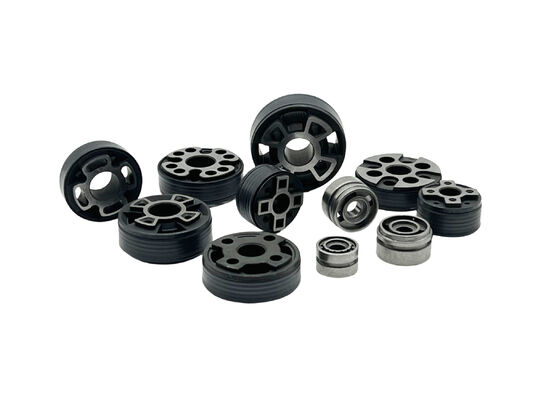
Motorcycle Shock Absorber Pistons for Different Suspension Applications

Motorcycle Shock Absorber Pistons for Different Suspension Applications

MOQ: 500pcs
Price: negotiation
Standard Packaging: According to customer’s demand
Delivery Period: 10 working days
Payment Method: T/T
Supply Capacity: 1,000,000pcs per month
Detail Information
Place of Origin
Ningbo, China
Brand Name
XIAYI
Certification
IATF16949:2016
Model Number
Φ20mm
Product Name:
Banded Piston
Material Of Piston:
Aluminum
Material Of Bands:
PTFE
Color:
White
Application:
Rear Shock Absorbers
Density Of Bands:
2.15 G/cm3
Outer Diameter:
44.88-44.94mm
Working Temp.:
260 ℃
Product Description
1. Product Overview

A motorcycle shock absorber piston is a functional component that works with the piston rod, damping valves and hydraulic oil to control oil flow inside the shock absorber.

Different motorcycles operate under different riding conditions. A street motorcycle, an off-road motorcycle and a high-performance sport motorcycle may have different suspension structures, damping requirements and component specifications. Therefore, their shock absorber pistons may require different dimensions, oil passage configurations and structural designs.

XIAYI manufactures powder metallurgy shock absorber pistons for various motorcycle suspension applications. We provide customized solutions based on piston dimensions, oil passage requirements, material specifications and customer assembly drawings.

Our focus is not simply on producing pistons in different sizes, but on matching component geometry and manufacturing requirements to the actual shock absorber design.

Product capabilities:

  • Different piston outer diameters and thicknesses.
  • Customized center bore and fitting dimensions.
  • Multiple oil hole numbers, diameters and positions.
  • Different piston profiles and structural configurations.
  • Powder metallurgy manufacturing solutions.
  • OEM customization based on drawings and samples.
2. Selecting Piston Designs for Different Motorcycle Applications

The correct piston design depends on the motorcycle type, suspension structure, damping system and intended operating conditions. The following table provides general application considerations for piston development.

Motorcycle Application Typical Operating Conditions Piston Design Considerations
Street Motorcycles Daily commuting, urban roads and paved surfaces Dimensional compatibility, consistent oil passage geometry and stable assembly
Sport Motorcycles Higher-speed riding, frequent acceleration and braking Damping system compatibility, accurate oil passage dimensions and component consistency
Off-Road Motorcycles Uneven terrain, repeated impacts and larger suspension movements Structural strength, secure fitting dimensions and compatibility with the intended damping system
Touring Motorcycles Longer riding distances and varying road conditions Reliable dimensional stability and compatibility with the specified suspension design
Scooters Compact suspension structures and limited installation space Compact dimensions, center bore accuracy and correct assembly clearance
Customized Motorcycle Suspension Special suspension geometry or modified damping systems Drawing-based piston geometry, customized oil passages and application-specific validation
3. How Piston Structure Affects Shock Absorber Performance
3.1 Piston Outer Diameter and Thickness

The piston outer diameter must match the working cylinder and specified clearance requirements. Incorrect dimensions may cause excessive clearance, unwanted contact or interference during assembly.

Piston thickness also affects the available space for oil passages and valve components. It should be evaluated together with the piston rod, valve stack and shock absorber structure.

Key considerations:

  • Working cylinder inner diameter.
  • Piston outer diameter and dimensional tolerance.
  • Piston thickness and overall height.
  • Required radial clearance.
  • Assembly position and valve stack space.
3.2 Oil Hole Number and Diameter

Oil holes provide flow passages through the piston. Their number, diameter, position and distribution influence hydraulic flow characteristics.

However, a larger hole does not automatically mean better damping performance. The actual damping response also depends on oil viscosity, valve shim configuration, piston geometry, operating speed and the overall hydraulic circuit.

When developing a customized piston, the oil passage design should be reviewed together with the complete damping system.

3.3 Center Bore and Piston Rod Matching

The center bore must match the piston rod and its specified fastening or positioning structure.

An incorrect bore diameter or fit may lead to assembly difficulties, excessive movement or positioning problems.

The center bore, end-face geometry and mounting arrangement should be confirmed using the customer's assembly drawings.

3.4 Material and Manufacturing Requirements

Powder metallurgy is suitable for manufacturing pistons with repeated structural features and customized geometries.

Material selection should consider the required mechanical properties, component density, structural design, operating loads and production process.

XIAYI can evaluate suitable powder metallurgy material options according to customer specifications and application requirements.

4. Piston Assembly Considerations

Correct piston installation is important for maintaining the intended shock absorber structure and damping characteristics. The following points should be checked during assembly.

Assembly Item What to Check Potential Issue if Incorrect
Piston Outer Diameter Match with working cylinder specifications Excessive clearance or interference
Center Bore Match with piston rod diameter and mounting design Incorrect positioning or assembly difficulty
Piston Orientation Follow the specified installation direction Incorrect assembly of directional structures
Oil Hole Alignment Confirm the correct relationship with valve components and oil passages Restricted or unintended oil flow
Valve Shim Stack Follow the specified shim sequence, thickness and orientation Different damping response from the intended design
Contact Surfaces Check for burrs, scratches and contamination Improper seating or potential wear
Fastening Structure Follow the specified tightening method and torque Loosening, deformation or assembly damage
Cleanliness Remove metal particles and other contaminants Oil passage blockage or internal component damage
5. Product Specifications and Customization

XIAYI supports customized motorcycle shock absorber pistons based on customer drawings, samples and technical specifications.

Technical Parameter Customization Range / Requirement
Product Type Motorcycle shock absorber piston
Manufacturing Process Powder metallurgy, with additional machining when required
Outer Diameter Customized according to drawings
Thickness / Height Customized according to assembly dimensions
Center Bore Customized diameter and profile
Oil Hole Quantity According to hydraulic design
Oil Hole Diameter According to customer specifications
Hole Position Customized layout and distribution
Material Grade Evaluated according to mechanical requirements
Surface Requirements Defined according to mating and functional surfaces
Dimensional Tolerance Confirmed for critical dimensions
Production Volume Prototype, small batch and mass production
6. Quality Control for Motorcycle Shock Absorber Pistons

Dimensional consistency is important when pistons are produced for repeated assembly in motorcycle shock absorbers.

Depending on the agreed inspection plan, quality checks may include:

  • Outer diameter and thickness measurement.
  • Center bore diameter inspection.
  • Oil hole diameter and position inspection.
  • Flatness and parallelism checks where specified.
  • Visual inspection for cracks, burrs and surface defects.
  • Material density and mechanical property testing where required.
  • Sample assembly and fit verification when applicable.

For OEM projects, critical dimensions and inspection methods should be agreed before mass production.

7. Why Work with XIAYI?

Application-Oriented Product Development

We evaluate piston requirements according to the intended motorcycle suspension application rather than relying on a single standard piston design.

Multiple Specifications

Different outer diameters, heights, center bores and oil passage configurations can be developed for different shock absorber models.

Drawing and Sample-Based Customization

Customers can provide engineering drawings, 3D files or physical samples for product evaluation.

Powder Metallurgy Manufacturing

We provide powder metallurgy solutions for customized piston geometries and repeated production requirements.

OEM Production Support

Support includes technical review, tooling evaluation, sample development and mass production according to approved specifications.

Related Component Supply

Where required, customers can also discuss related shock absorber components, including bottom valves, rod guides and other powder metallurgy parts.

8. Request a Quote for Motorcycle Shock Absorber Pistons

To help us evaluate your motorcycle shock absorber piston project, please provide:

  1. Motorcycle model or shock absorber application.
  2. Piston drawing or physical sample.
  3. Outer diameter, thickness and center bore dimensions.
  4. Oil hole quantity, diameter and position.
  5. Material and mechanical property requirements.
  6. Assembly drawings or related valve specifications.
  7. Estimated order quantity and annual demand.

XIAYI welcomes inquiries from motorcycle shock absorber manufacturers, suspension system suppliers and OEM customers.

Contact XIAYI for motorcycle shock absorber pistons developed around your product dimensions, damping system and assembly requirements.

Products
PRODUCTS DETAILS
Motorcycle Shock Absorber Pistons for Different Suspension Applications
MOQ: 500pcs
Price: negotiation
Standard Packaging: According to customer’s demand
Delivery Period: 10 working days
Payment Method: T/T
Supply Capacity: 1,000,000pcs per month
Detail Information
Place of Origin
Ningbo, China
Brand Name
XIAYI
Certification
IATF16949:2016
Model Number
Φ20mm
Product Name:
Banded Piston
Material Of Piston:
Aluminum
Material Of Bands:
PTFE
Color:
White
Application:
Rear Shock Absorbers
Density Of Bands:
2.15 G/cm3
Outer Diameter:
44.88-44.94mm
Working Temp.:
260 ℃
Minimum Order Quantity:
500pcs
Price:
negotiation
Packaging Details:
According to customer’s demand
Delivery Time:
10 working days
Payment Terms:
T/T
Supply Ability:
1,000,000pcs per month
Product Description
1. Product Overview

A motorcycle shock absorber piston is a functional component that works with the piston rod, damping valves and hydraulic oil to control oil flow inside the shock absorber.

Different motorcycles operate under different riding conditions. A street motorcycle, an off-road motorcycle and a high-performance sport motorcycle may have different suspension structures, damping requirements and component specifications. Therefore, their shock absorber pistons may require different dimensions, oil passage configurations and structural designs.

XIAYI manufactures powder metallurgy shock absorber pistons for various motorcycle suspension applications. We provide customized solutions based on piston dimensions, oil passage requirements, material specifications and customer assembly drawings.

Our focus is not simply on producing pistons in different sizes, but on matching component geometry and manufacturing requirements to the actual shock absorber design.

Product capabilities:

  • Different piston outer diameters and thicknesses.
  • Customized center bore and fitting dimensions.
  • Multiple oil hole numbers, diameters and positions.
  • Different piston profiles and structural configurations.
  • Powder metallurgy manufacturing solutions.
  • OEM customization based on drawings and samples.
2. Selecting Piston Designs for Different Motorcycle Applications

The correct piston design depends on the motorcycle type, suspension structure, damping system and intended operating conditions. The following table provides general application considerations for piston development.

Motorcycle Application Typical Operating Conditions Piston Design Considerations
Street Motorcycles Daily commuting, urban roads and paved surfaces Dimensional compatibility, consistent oil passage geometry and stable assembly
Sport Motorcycles Higher-speed riding, frequent acceleration and braking Damping system compatibility, accurate oil passage dimensions and component consistency
Off-Road Motorcycles Uneven terrain, repeated impacts and larger suspension movements Structural strength, secure fitting dimensions and compatibility with the intended damping system
Touring Motorcycles Longer riding distances and varying road conditions Reliable dimensional stability and compatibility with the specified suspension design
Scooters Compact suspension structures and limited installation space Compact dimensions, center bore accuracy and correct assembly clearance
Customized Motorcycle Suspension Special suspension geometry or modified damping systems Drawing-based piston geometry, customized oil passages and application-specific validation
3. How Piston Structure Affects Shock Absorber Performance
3.1 Piston Outer Diameter and Thickness

The piston outer diameter must match the working cylinder and specified clearance requirements. Incorrect dimensions may cause excessive clearance, unwanted contact or interference during assembly.

Piston thickness also affects the available space for oil passages and valve components. It should be evaluated together with the piston rod, valve stack and shock absorber structure.

Key considerations:

  • Working cylinder inner diameter.
  • Piston outer diameter and dimensional tolerance.
  • Piston thickness and overall height.
  • Required radial clearance.
  • Assembly position and valve stack space.
3.2 Oil Hole Number and Diameter

Oil holes provide flow passages through the piston. Their number, diameter, position and distribution influence hydraulic flow characteristics.

However, a larger hole does not automatically mean better damping performance. The actual damping response also depends on oil viscosity, valve shim configuration, piston geometry, operating speed and the overall hydraulic circuit.

When developing a customized piston, the oil passage design should be reviewed together with the complete damping system.

3.3 Center Bore and Piston Rod Matching

The center bore must match the piston rod and its specified fastening or positioning structure.

An incorrect bore diameter or fit may lead to assembly difficulties, excessive movement or positioning problems.

The center bore, end-face geometry and mounting arrangement should be confirmed using the customer's assembly drawings.

3.4 Material and Manufacturing Requirements

Powder metallurgy is suitable for manufacturing pistons with repeated structural features and customized geometries.

Material selection should consider the required mechanical properties, component density, structural design, operating loads and production process.

XIAYI can evaluate suitable powder metallurgy material options according to customer specifications and application requirements.

4. Piston Assembly Considerations

Correct piston installation is important for maintaining the intended shock absorber structure and damping characteristics. The following points should be checked during assembly.

Assembly Item What to Check Potential Issue if Incorrect
Piston Outer Diameter Match with working cylinder specifications Excessive clearance or interference
Center Bore Match with piston rod diameter and mounting design Incorrect positioning or assembly difficulty
Piston Orientation Follow the specified installation direction Incorrect assembly of directional structures
Oil Hole Alignment Confirm the correct relationship with valve components and oil passages Restricted or unintended oil flow
Valve Shim Stack Follow the specified shim sequence, thickness and orientation Different damping response from the intended design
Contact Surfaces Check for burrs, scratches and contamination Improper seating or potential wear
Fastening Structure Follow the specified tightening method and torque Loosening, deformation or assembly damage
Cleanliness Remove metal particles and other contaminants Oil passage blockage or internal component damage
5. Product Specifications and Customization

XIAYI supports customized motorcycle shock absorber pistons based on customer drawings, samples and technical specifications.

Technical Parameter Customization Range / Requirement
Product Type Motorcycle shock absorber piston
Manufacturing Process Powder metallurgy, with additional machining when required
Outer Diameter Customized according to drawings
Thickness / Height Customized according to assembly dimensions
Center Bore Customized diameter and profile
Oil Hole Quantity According to hydraulic design
Oil Hole Diameter According to customer specifications
Hole Position Customized layout and distribution
Material Grade Evaluated according to mechanical requirements
Surface Requirements Defined according to mating and functional surfaces
Dimensional Tolerance Confirmed for critical dimensions
Production Volume Prototype, small batch and mass production
6. Quality Control for Motorcycle Shock Absorber Pistons

Dimensional consistency is important when pistons are produced for repeated assembly in motorcycle shock absorbers.

Depending on the agreed inspection plan, quality checks may include:

  • Outer diameter and thickness measurement.
  • Center bore diameter inspection.
  • Oil hole diameter and position inspection.
  • Flatness and parallelism checks where specified.
  • Visual inspection for cracks, burrs and surface defects.
  • Material density and mechanical property testing where required.
  • Sample assembly and fit verification when applicable.

For OEM projects, critical dimensions and inspection methods should be agreed before mass production.

7. Why Work with XIAYI?

Application-Oriented Product Development

We evaluate piston requirements according to the intended motorcycle suspension application rather than relying on a single standard piston design.

Multiple Specifications

Different outer diameters, heights, center bores and oil passage configurations can be developed for different shock absorber models.

Drawing and Sample-Based Customization

Customers can provide engineering drawings, 3D files or physical samples for product evaluation.

Powder Metallurgy Manufacturing

We provide powder metallurgy solutions for customized piston geometries and repeated production requirements.

OEM Production Support

Support includes technical review, tooling evaluation, sample development and mass production according to approved specifications.

Related Component Supply

Where required, customers can also discuss related shock absorber components, including bottom valves, rod guides and other powder metallurgy parts.

8. Request a Quote for Motorcycle Shock Absorber Pistons

To help us evaluate your motorcycle shock absorber piston project, please provide:

  1. Motorcycle model or shock absorber application.
  2. Piston drawing or physical sample.
  3. Outer diameter, thickness and center bore dimensions.
  4. Oil hole quantity, diameter and position.
  5. Material and mechanical property requirements.
  6. Assembly drawings or related valve specifications.
  7. Estimated order quantity and annual demand.

XIAYI welcomes inquiries from motorcycle shock absorber manufacturers, suspension system suppliers and OEM customers.

Contact XIAYI for motorcycle shock absorber pistons developed around your product dimensions, damping system and assembly requirements.

宁波夏亿机电科技有限公司